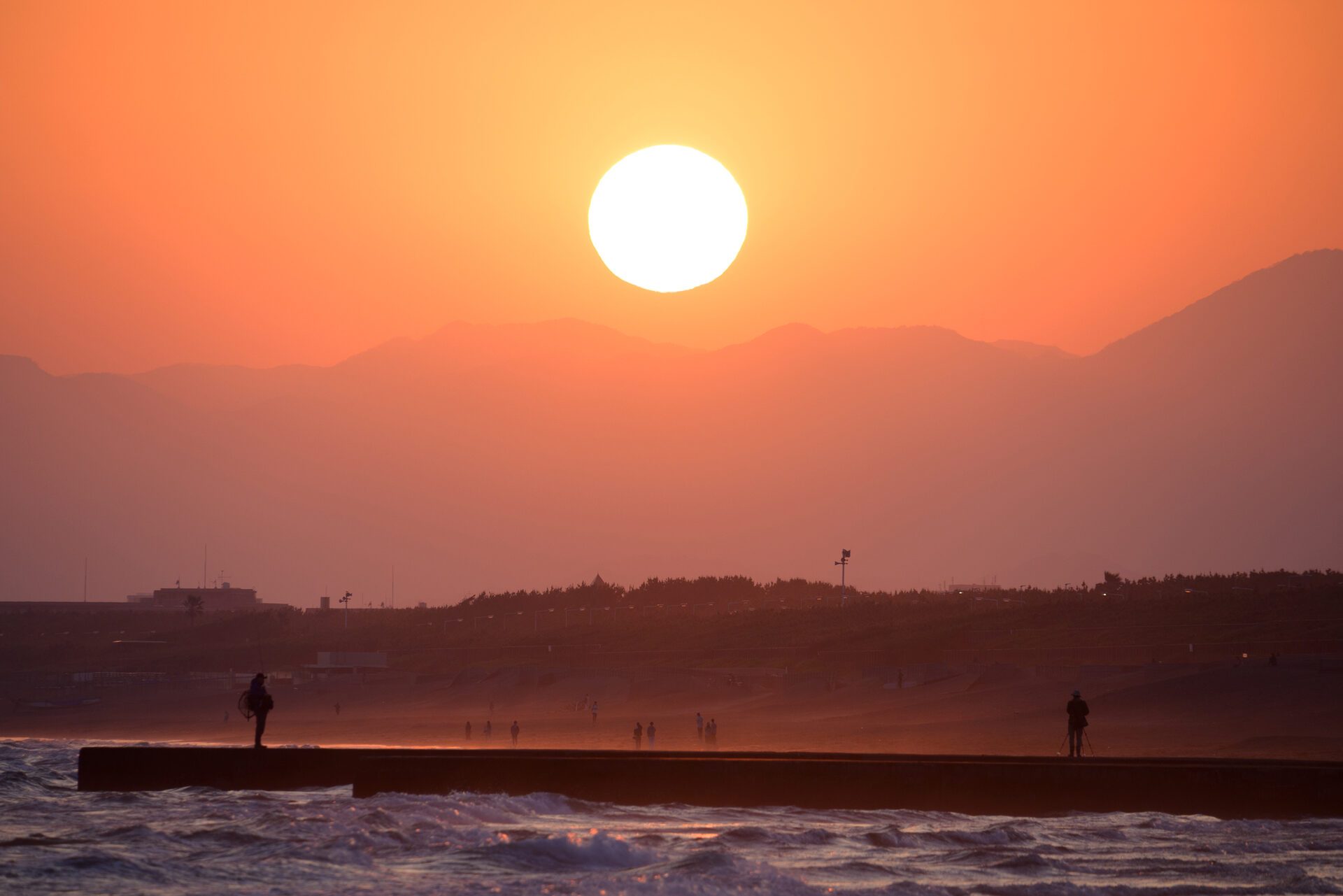
Magic hour photography in South Africa rewards anyone willing to plan. Twilight at our latitudes is short. The light that turns the Karoo amber, or drops a deep blue behind the Sandton skyline, arrives quickly and leaves just as fast. Get the timing right and an ordinary street corner in Braamfontein or a stretch of shoreline near Umhlanga becomes something worth printing.
This guide covers what happens to the light during the golden and blue hours, which camera settings suit each, how to compose while the light is falling, and what to look for in a lens when the window is measured in minutes.
What is magic hour photography?
Magic hour photography covers two connected windows: the golden hour and the blue hour. Each produces its own gradient across the sky, and each asks something different of your camera. The golden hour gives you warmth, long shadows and a soft glow around your subject. The blue hour trades that for cool, even light and a sky deep enough to make artificial lighting count.