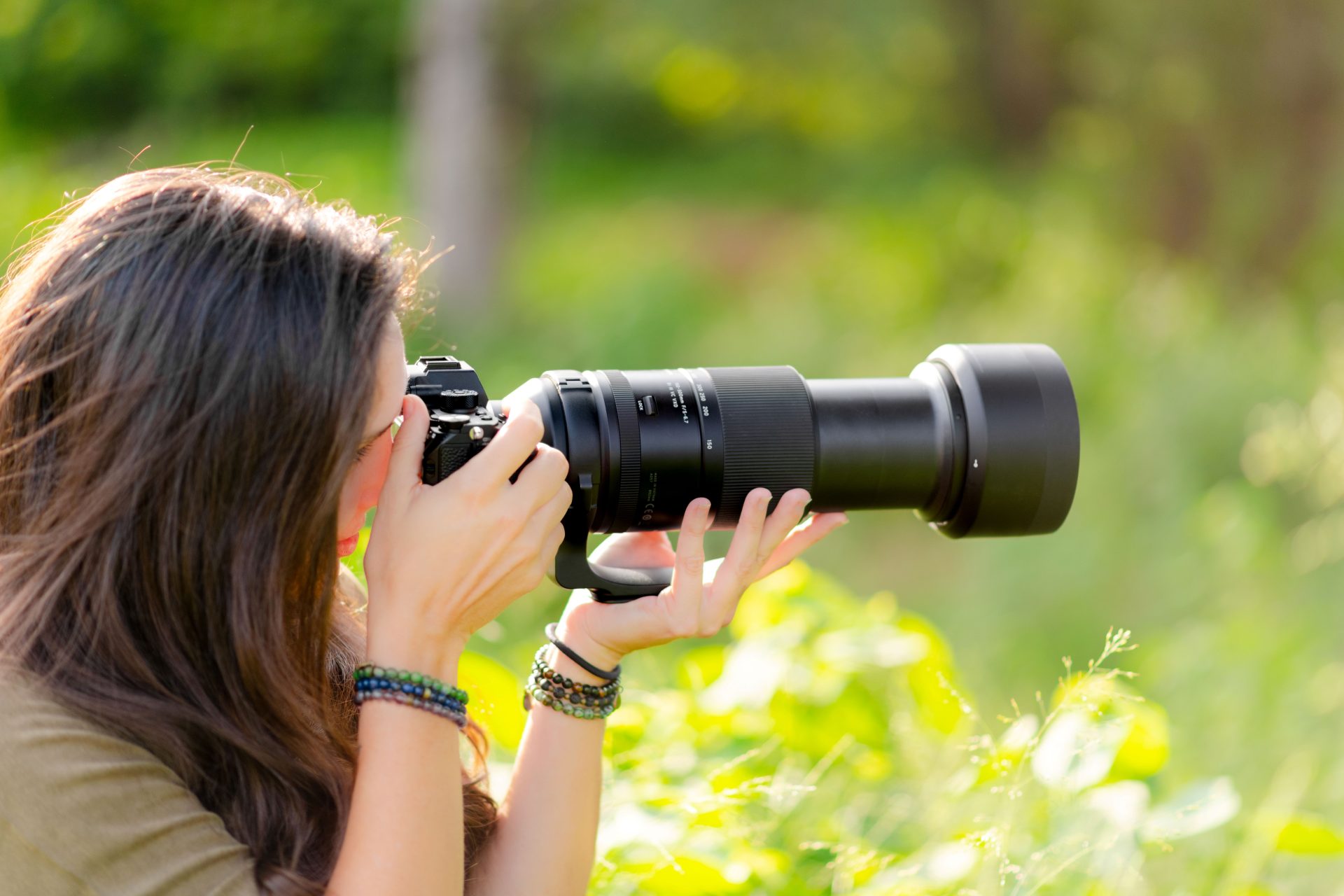
A telephoto lens brings distant subjects close and holds onto fine detail while doing it. That makes it the obvious tool for sport, birds, wildlife and aviation, and it is easy to assume from that list that a telephoto lens is specialist equipment for people who do this for a living.
It is not. A telephoto lens is just as much at home at a school athletics meeting, at a family portrait session in a back garden, or pointed at a ridgeline from a viewpoint an hour outside town. This guide covers what defines a telephoto lens, the three focal-length bands it divides into, the subjects it suits best, how to shoot with one cleanly, and what to weigh up when you are choosing one.
What Is a Telephoto Lens? Four Defining Characteristics
As a general rule, any lens with a focal length of roughly 80mm or more counts as a telephoto lens. Conventions vary between manufacturers and writers — some draw the line at 70mm, others at 85mm — but the working definition is the same: a narrow angle of view that