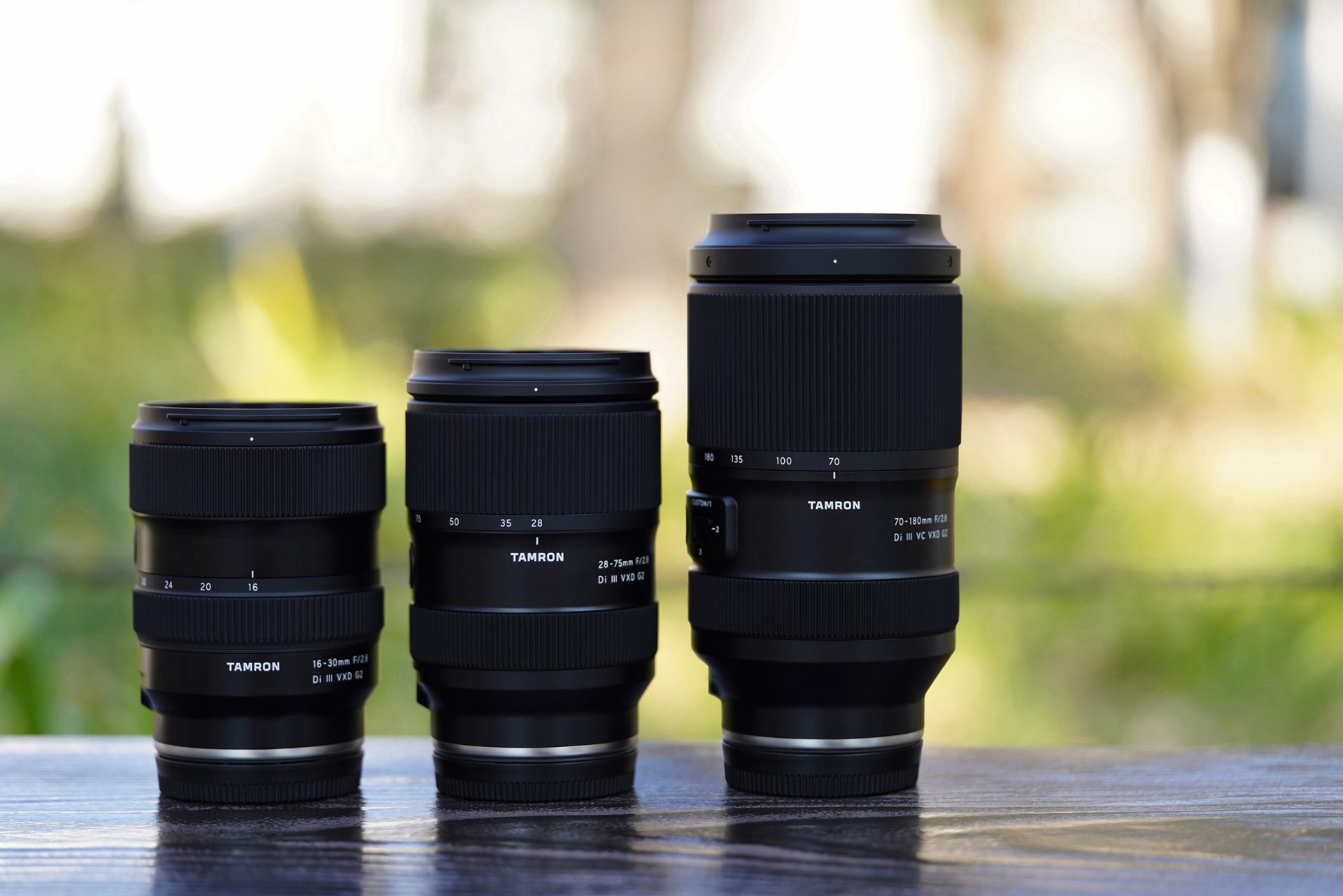
You own a kit zoom, and probably a fast prime or two. You have been circling an F2.8 zoom for months — reading reviews, watching the price, putting it off. Something keeps stopping you, and it is usually one of two things: what it costs, or what it weighs.
Holy trinity lenses are the three constant-F2.8 zooms that between them cover almost everything: a wide-angle, a standard and a telephoto. They are the professional default for good reasons, and they are also genuinely easy to talk yourself out of.
This article argues both sides. The first half covers why some photographers decide they do not need them, and several of those reasons are sound. The second half covers what you gain if you do buy in, which situations justify it, and what to check before you spend. Focal lengths are given for full-frame, with APS-C equivalents noted where they matter.
What are holy trinity lenses?
The holy trinity is three zoom lenses that each hold a maximum aperture of F2.8 across their entire zoom range: