| September 18, 2026
 South Africa's #1 Mobile Protection Brand
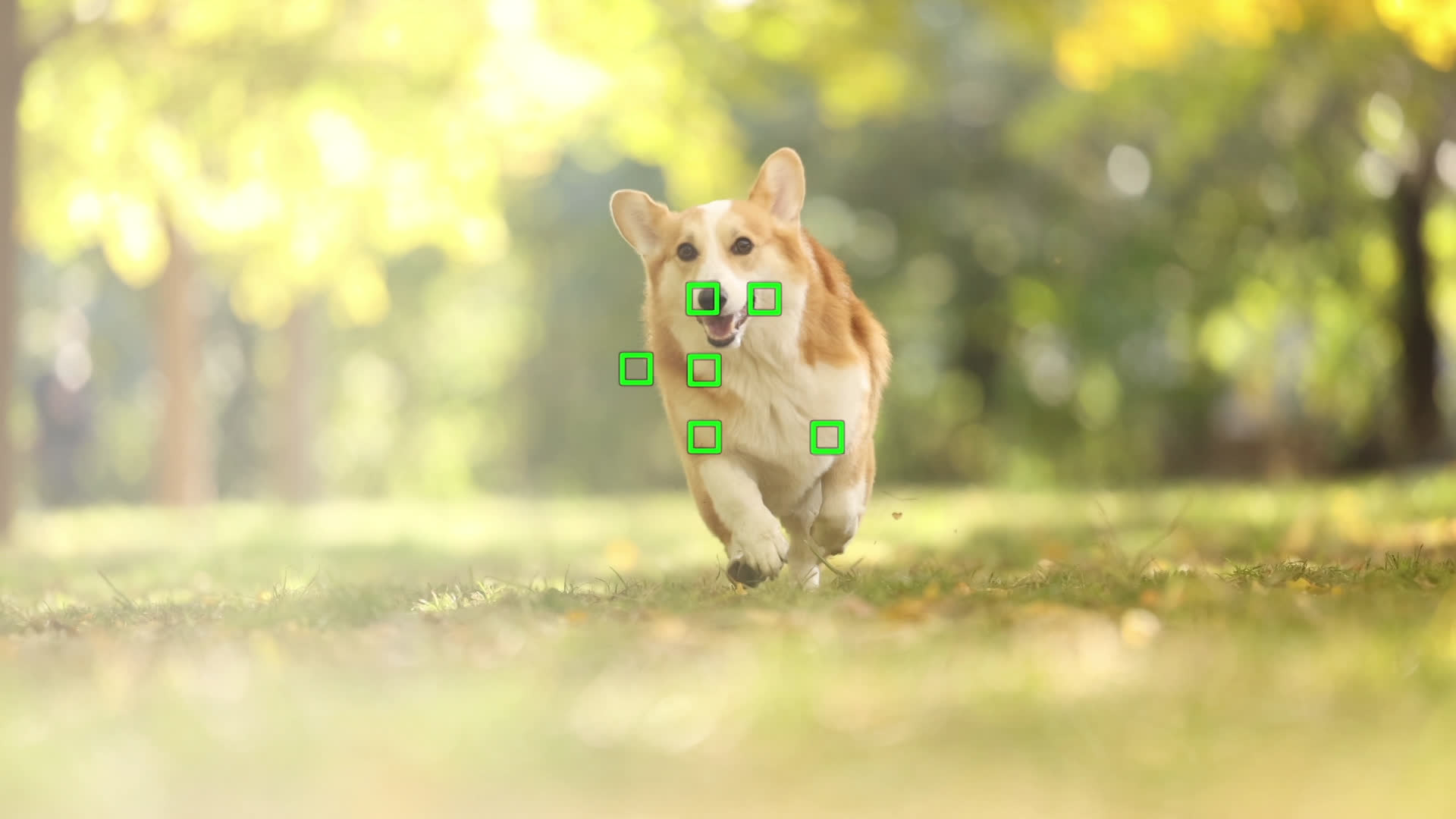
Almost nobody focuses a camera by hand any more, and almost nobody changes the autofocus settings either. The camera arrives on its defaults, the defaults work well enough for a photograph of a stationary friend in good light, and most people never look further. The trouble starts the moment the subject moves, the light drops, or there is more than one thing in the frame worth focusing on — at which point the default is frequently the wrong choice, and the resulting photograph is sharp in the wrong place. This article covers what autofocus is, the modes and focus areas you can choose between, how the underlying mechanisms actually work, and when to turn the whole thing off.
Autofocus is the camera's ability to bring a subject into focus without your intervention. Several different technologies sit behind it, and which one your camera uses affects how quickly and reliably it works — but from the photographer's side, the controls come down to two decisions: which operating mode to use, and which part of the frame the camera should be looking at. That second setting is the focus area, and it is covered further down.
Modern systems do considerably more than find focus once. They track — holding a subject as it moves across the frame, or toward you, or behind an intervening object and out again — and they increasingly recognise what they are looking at, detecting faces, eyes and animals and prioritising them automatically. Tracking is the capability that separates a current autofocus system from one of ten years ago, and it is what makes photographing sport, birds in flight or a running child a reasonable proposition rather than a matter of luck.
Manual focus, usually marked MF, means turning the focus ring on the lens yourself until the subject is sharp. It is slower and takes practice, but it puts the decision entirely in your hands, and there is no ambiguity about what the camera thought you meant.
Autofocus is not automatically the better option. There is a specific set of conditions where it struggles, and recognising them saves a great deal of frustration.
Low contrast. Autofocus works by finding detail — an edge, a line, a change in tone. Point a camera at a blank painted wall, an unbroken expanse of sky or thick mist and there is nothing for the system to lock onto. The lens will hunt back and forth and give up.
Low light. Contrast falls with light levels, so the same problem appears after sunset and in dim interiors. Most cameras have an AF assist light for exactly this — a small lamp on the body that projects light or a patterned beam onto the subject to give the system something to read. It works only over a few metres, and it is conspicuous, so it is worth switching off at a concert, a graduation or anywhere else the light would intrude.
Glass, mesh and fencing. Shooting through a window, a vehicle windscreen or the diamond mesh of a sports ground fence gives autofocus two competing planes, and it will often choose the near one. This is the classic case for switching to manual.
Repeating patterns. Brickwork, tiling, slatted fencing and stadium seating can defeat a system by offering many equally plausible points of focus.
Heavy foreground clutter. Grass, branches or a crowd between you and your subject will frequently capture the focus instead.
If autofocus is hunting and refusing to settle, work through that list before assuming something is broken. Two further things worth checking: whether the subject is closer than the lens's minimum object distance, in which case no amount of hunting will help, and whether the AF/MF switch on the lens barrel has been knocked across, which happens more often than anyone admits.
The sensible approach is not to choose between the two but to use both. Autofocus for the great majority of situations, manual for the ones above, and many photographers use manual routinely for macro and for landscape work at small apertures, where precision matters more than speed.
Cameras offer three operating modes, and choosing the right one for your subject is the single most useful autofocus adjustment you can make.
One point of confusion worth clearing up first. All three modes exist on essentially every system, but the names differ by manufacturer, which makes menus harder to navigate than they need to be. On Canon bodies the three modes are called One Shot AF, AI Servo AF and AI Focus AF, corresponding to AF-S, AF-C and AF-A respectively. The function is the same; only the label changes.
AF-S single autofocus mode
https://tamronlenses.co.za/tamron-f072-90mm-f-2-8-di-iii-macro-vxd-lens-for-sony-e
TAMRON 90mm F2.8 MACRO (Model F072) Focal length: 90mm Exposure: F11 Shutter Speed: 1/200sec ISO: 320
AF-S acquires focus once and then locks it. Press the shutter button halfway, the camera focuses, and it holds that focus for as long as you keep the button held — regardless of what happens in front of you afterwards.
This is the mode for anything that is not moving. Coastal and mountain landscapes, architecture, still life, and portraits where your subject is holding a position all suit it. It is also the mode that allows the focus-and-recompose technique: point the centre of the frame at your subject, half-press to lock, then move the camera to the composition you actually want and take the picture.
That technique has a limitation worth knowing. Recomposing swings the camera, which tilts the plane of focus slightly relative to your subject. At F8 the resulting shift disappears into the depth of field and nothing goes wrong. At F1.8, photographing someone from close range, it can be enough to move the sharpest point from the eye to the ear. If you are working at wide apertures, moving the AF point to your subject is more reliable than moving the camera.
AF-C continuous autofocus mode

TAMRON 28-300mm F4-7.1 (Model A074) Focal length: 178mm Exposure: F7.1 Shutter Speed: 1/1250sec ISO: 200
AF-C never stops. For as long as the shutter button is held halfway, the camera continues adjusting focus, following the subject rather than locking onto it. Continuous autofocus is what makes moving subjects possible at all.
Cricket, rugby and school athletics are the obvious cases, along with birds in flight, and our articles on sports photography and bird photography go further into the technique around each.
There is a distinction the source material on this subject usually misses. What defeats a locked focus is not movement across the frame but movement along the axis toward or away from you. A player running left to right at a constant distance stays sharp; a player running straight at you does not, and will be soft within a stride or two. If your subject's distance from the camera is changing at all, you want AF-C, even if they are not moving fast.
AF-A automatic autofocus switching

TAMRON 50-400mm F4.5-6.3 (Model A067) Focal length: 400mm Exposure: F6.3 Shutter Speed: 1/320sec ISO: 800
AF-A leaves the decision to the camera. It watches for movement and switches between single and continuous behaviour on its own.
It suits subjects that alternate unpredictably between stillness and motion — a child who is sitting quietly one second and running the next, or a dog that has spotted something. Our articles on children's photography and photographing dogs and cats both cover this kind of shooting in more detail.
Worth being honest about the trade-off, though: AF-A is guessing, and it can guess wrong or take a moment to change its mind. If you already know whether your subject is going to move, selecting AF-S or AF-C yourself will be more reliable. AF-A is for genuine uncertainty rather than a general-purpose default.
The operating mode determines *how* the camera focuses. The focus area determines *where* it looks. Both matter, and the second is the one more often left on its default.
Focus areas are built from AF points — the individual focus detection positions spread across the frame, which the next section explains in full. The names and exact behaviours vary between manufacturers, but the following types appear on nearly every camera in some form.
Wide focus area

TAMRON 50-400mm F4.5-6.3 (Model A067) Focal length: 400mm Exposure: F6.3 Shutter Speed: 1/800sec ISO: 320
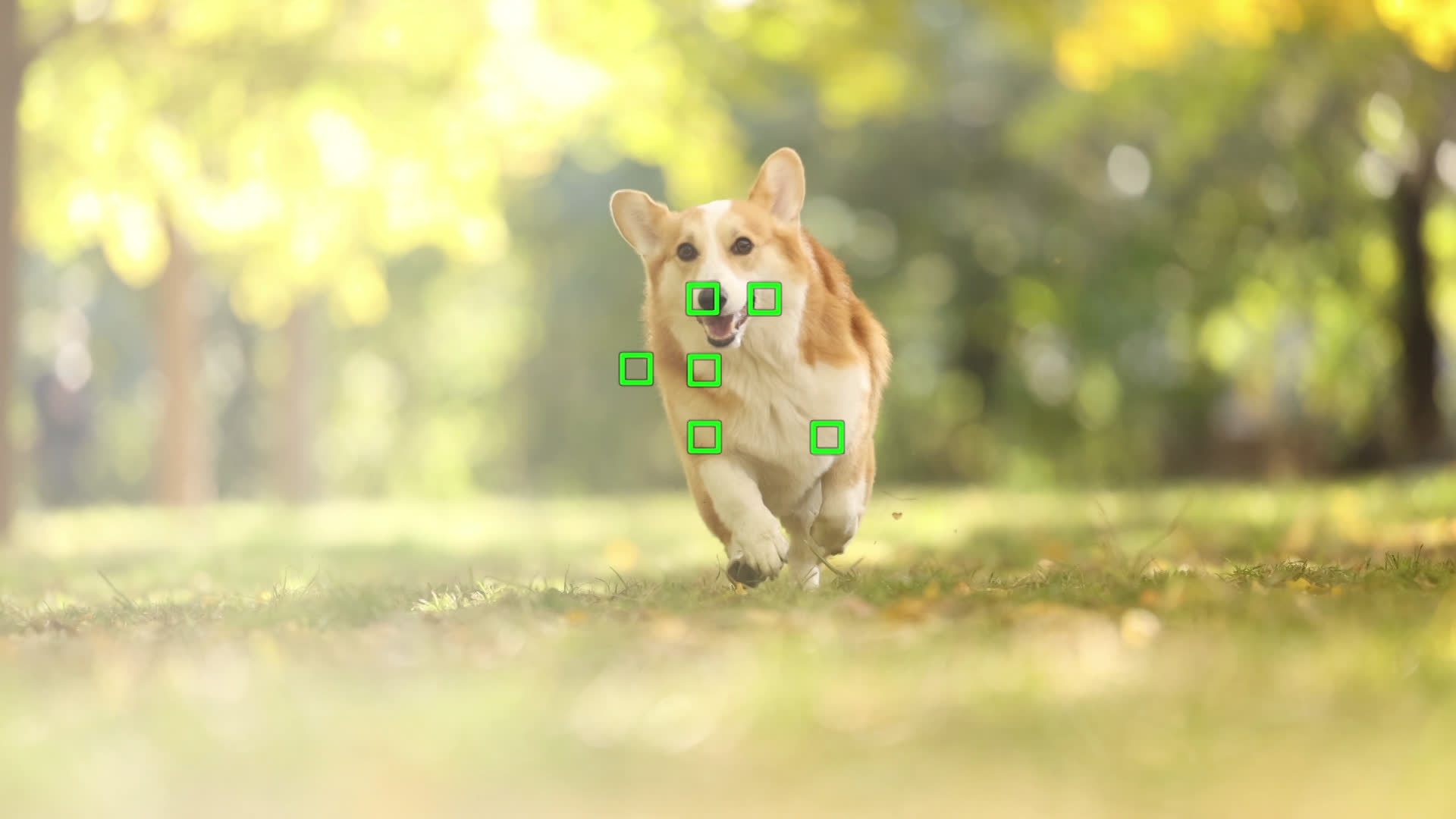
Wide focus hands the entire frame to the camera and lets it decide. Every available AF point is active, and the system chooses what to focus on.
The appeal is that it frees your attention completely. You concentrate on framing and timing while the camera handles focus, which is genuinely useful when a subject appears without warning — a dog or cat that has started moving, or garden birds that will not stay put long enough for you to position anything.
The cost is control. Left to itself, a camera generally favours whatever is nearest and highest in contrast, and that is not always your subject. Photograph someone standing behind a fence, a branch or a table edge and wide focus will frequently choose the obstacle. Modern subject-detection helps considerably here, but when it matters, a narrower area is the safer choice.
Tracking autofocus mode
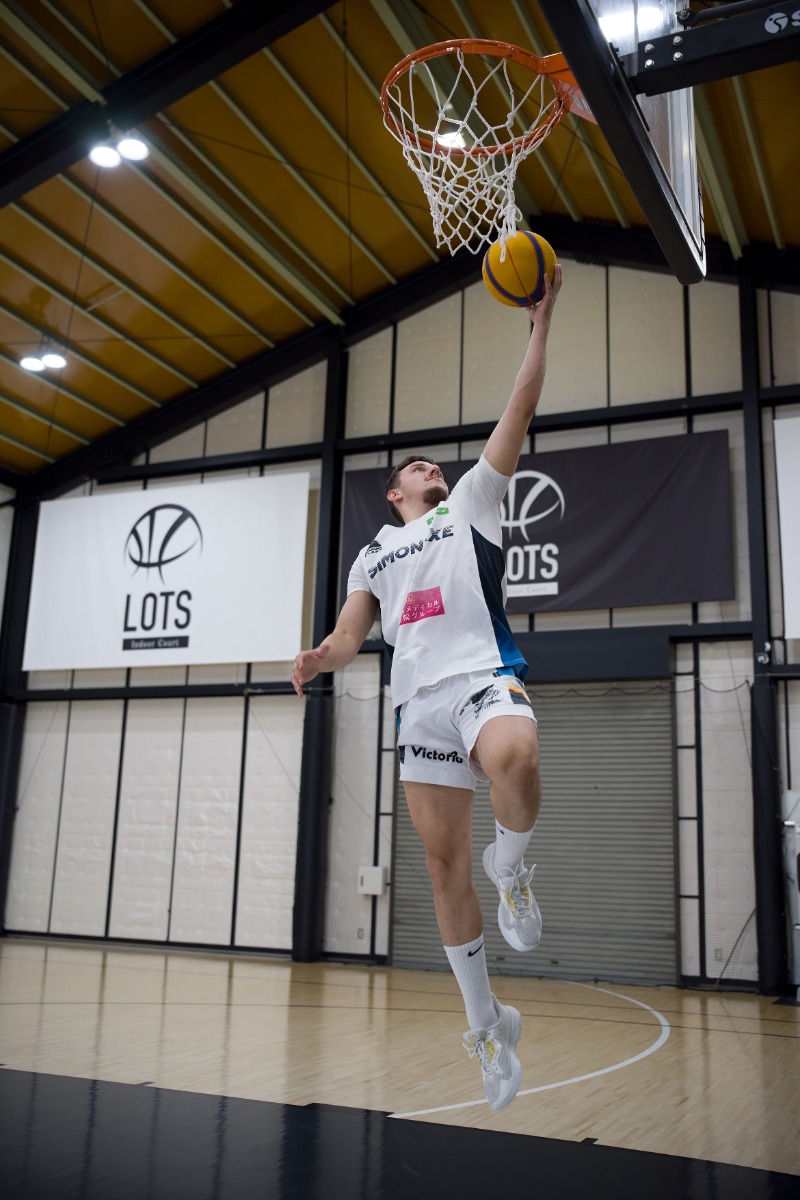
TAMRON 35-150mm F2-2.8 (Model A058) Focal length: 35mm Exposure: F2.5 Shutter Speed: 1/2000sec ISO: 2000
Tracking works in combination with AF-C. You select a subject, and the camera follows it around the frame, moving the active focus point to stay with it rather than waiting for the subject to return to where you first locked on.
This solves a specific and common problem: picking one person out of many. At a school athletics meeting or a club rugby or cricket fixture, the frame is full of people moving in different directions, and any area-based mode will happily jump to whoever passes nearest. Tracking holds the one you chose.
It serves birding equally well, where a subject that is small in the frame and moving erratically is otherwise very difficult to keep under a fixed point — whether you are working Western Cape wetlands, the dam edges of the Highveld or the forest belt along the KwaZulu-Natal coast.
Zone focus area

TAMRON 28-75mm F2.8 G2 (Model A063) Focal length: 75mm Exposure: F2.8 Shutter Speed: 1/500sec ISO: 500
Zone focus is the middle ground. Rather than the whole frame or a single point, you activate a block of AF points covering part of the frame, and the camera focuses on the nearest or highest-contrast subject within that block only.
The concept it depends on is the predictable movement lane. A great deal of what we photograph moves within known limits: a batter stays at the crease, a lineout happens in a defined space, a bird returns repeatedly to the same perch. Place your zone over that area and the camera will not be distracted by anything outside it, while still giving your subject room to move within it.
It is the practical answer whenever a single spot is too demanding to hold on a moving subject but the whole frame is too permissive.
Centre focus area

TAMRON 70-300mm F4.5-6.3 (Model A047) Focal length: 168mm Exposure: F5.6 Shutter Speed: 1/400sec ISO: 200
Centre focus restricts the camera to the middle of the frame. It is the simplest area of all, and on many cameras the central points are also the most sensitive, which makes it a reliable choice in poor light.
Its obvious use is any composition where the subject is already central — see our article on composition basics for when that is the right choice and when it is not. Where the subject is off-centre, the focus lock function lets you focus on the middle, hold, and recompose, exactly as described under AF-S above. The same caution applies: at wide apertures, recomposing can move the plane of focus enough to matter, so if you are shooting a portrait at F2 you are better off moving the point than the camera.
Spot and extended spot focus areas

TAMRON 90mm F2.8 MACRO (Model F072) Focal length: 90mm Exposure: F2.8 Shutter Speed: 1/640sec ISO: 800
Spot focus, called flexible spot on some systems, restricts the camera to a single small point that you position anywhere in the frame. On most cameras the size of that point is adjustable, so you can match it to your subject.
This is the mode for precision. Macro and close-up work demands it, because at high magnification depth of field can be a matter of millimetres and the difference between the near and far edge of a fynbos flower is the difference between a usable photograph and a discarded one. Our articles on macro lenses cover this in more depth. It is equally the right choice in any cluttered composition where you need to specify exactly which of several candidates the camera should focus on.
Extended spot addresses the one weakness of that precision. When the point you have chosen has too little contrast to lock onto, the camera briefly draws on the AF points immediately surrounding it to find focus, then applies it. The result is the accuracy of spot focus with more tolerance for a subject that is moving slightly or is low in contrast. If spot is clearly the right choice but keeps failing to lock, extended spot is the answer.
An AF point — also called a focus point, and in some documentation a distance measurement point — is one of the individual focus detection positions the camera uses to find focus. They appear as small squares or brackets in the viewfinder or on the rear screen, and every focus area described above is simply a different way of choosing which of them are active.
The number varies enormously between models, from a few dozen to well over a thousand. More points generally means finer control over exactly where focus falls, and better coverage toward the edges of the frame, which matters whenever your subject is not near the middle.
The count on its own is a poor way to compare cameras, though. What matters more is how far across the frame the points extend, since a camera with fewer points spread edge to edge is more useful than one with many clustered centrally; how sensitive they are in low light; and whether they are of the more capable cross-type design. Coverage and quality beat quantity, and the specification most prominently advertised is rarely the one that will affect your photographs.
Three distinct technologies underlie autofocus. Most current cameras combine them, using each where it performs best, but they work in genuinely different ways and each has a characteristic strength.
Phase detection splits the light coming through the lens into two paths and compares them. If the two resulting images align, the lens is focused; if they are displaced relative to one another, the degree and direction of that displacement tells the camera not only that focus is wrong but exactly how wrong and which way to correct it.
That last property is what makes the method fast. The camera does not search — it calculates the required adjustment and drives the lens straight to it in a single movement, which is why phase detection became the foundation of high-speed autofocus and why it made sports and action photography practical.
The original implementation depended on a mirror. Light was directed downward to a dedicated autofocus sensor sitting separately from the imaging sensor, which required both the mirror assembly and the space to house it. That arrangement defined how cameras were built for decades, and the approach described next is what replaced it.
On-sensor phase detection applies the same principle without the separate sensor. Phase detection elements are built into the imaging sensor itself, so the camera measures displacement using the same surface that records the photograph.
Removing the mirror and the dedicated sensor made mirrorless cameras possible, and with them a substantial reduction in size and weight. It brought a second advantage as well: because detection happens on the imaging sensor, it works in live view and during video recording, where the older mirror-based method could not operate at all.
When the technology was introduced it was slower than the dedicated-sensor systems it replaced, and it drew more power. Current implementations have largely closed that gap, and the best of them are now comparable to or faster than what came before. Power consumption remains higher, which is why mirrorless cameras get through batteries more quickly.
Contrast detection works by trial. The camera drives the lens through its focus range while measuring contrast in the image, on the principle that contrast is highest at the point of sharpest focus. When contrast stops increasing and begins to fall, the camera reverses slightly and settles on the peak.
Because it measures the actual image on the sensor, rather than inferring focus from a separate measurement, it is the most accurate method in principle — there is no calibration to drift and no discrepancy between what the autofocus sensor sees and what the imaging sensor records. It also holds up well in low light on stationary subjects, where phase detection can struggle for want of contrast to compare.
The weakness is speed. The camera has no way of knowing which direction to move or how far, so it must search, overshoot and correct. That is acceptable for a landscape and hopeless for a moving subject.
Contrast detection requires no dedicated hardware, which made it the standard method in compact cameras and early smartphones. Phones have since largely moved to on-sensor phase detection, often assisted by laser or time-of-flight rangefinding. In current cameras contrast detection typically survives as a final confirmation step, with phase detection driving the lens close to correct and contrast detection verifying the last fraction — which is the combination that delivers both speed and accuracy.
Tamron uses the VXD (Voice-coil eXtreme-torque Drive) linear motor as the actuator behind its most demanding autofocus applications.
VXD drives focus smoothly and quickly across the full range, from the minimum object distance out to infinity, and holds that performance on large-aperture lenses where the focusing group is heavy and harder to move precisely. Performance stays consistent across the working range rather than falling away at one end.
Its tracking capability suits fast subjects particularly well, which is where the difference between a good autofocus system and an adequate one becomes obvious — the moment in a sports fixture that lasts a fraction of a second, or a portrait where an expression changes between frames.
The third characteristic is quietness. VXD generates very little vibration in operation and makes correspondingly little noise, which matters more than it might appear. A camera's internal microphone sits centimetres from the lens and will record a focus motor clearly, so quiet operation is close to essential for video work — our articles on vlogging and interchangeable-lens video go into this further. It matters equally in any setting where a noticeable camera would be intrusive: school prize-givings, graduations and concert venues among them.
Autofocus rewards a small amount of deliberate attention. Knowing the three operating modes lets you match the mode to the subject instead of accepting a default that suits only stationary ones. Knowing the focus areas lets you tell the camera where to look rather than hoping it works it out. And knowing how the underlying mechanisms differ explains why a given camera behaves the way it does in poor light or on a fast subject, which makes it far easier to predict and work around.
Lens choice matters here too, since the finest autofocus system in the world can only drive the focusing group the lens gives it. A fast, quiet, accurate focus motor is worth looking for in any lens intended for moving subjects or for video.
And it remains worth knowing when to switch it off. Through glass, in mist, in the dark, at high magnification or through foreground clutter, manual focus is not a fallback but the correct tool. Use autofocus for nearly everything, recognise the handful of situations where it will not cope, and you will spend far less time wondering why a photograph you remember taking carefully came back soft.