| September 18, 2026
 South Africa's #1 Mobile Protection Brand
Aperture shapes a photograph more decisively than any other setting. It governs how much light reaches the sensor, and it decides whether the background behind your subject dissolves into a soft wash of colour or stays sharp enough to count the leaves.
Different scenes call for different apertures. The settings that suit a portrait taken on a stoep in the last hour of afternoon light are nothing like the ones you would reach for at the top of Chapman’s Peak Drive with the whole Atlantic seaboard in front of you. This guide works through what aperture in photography actually is, how it interacts with shutter speed and ISO, and which f-stops to reach for across portraits, landscapes, night scenes, astrophotography and sport.
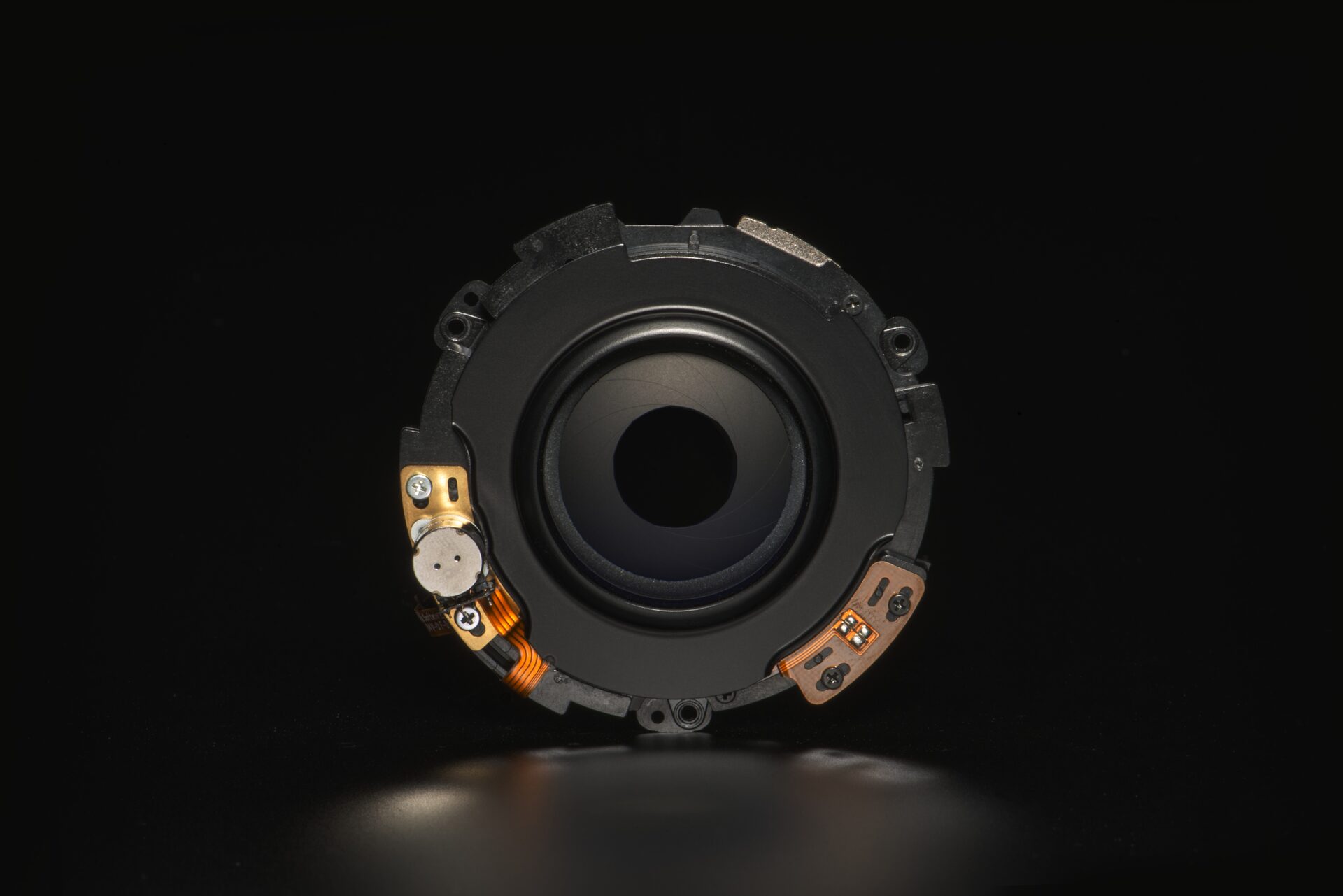
The aperture is an adjustable opening inside the lens, formed by a ring of overlapping blades. Widening or narrowing that opening controls how much light passes through to the sensor. The measurement describing how far open it sits is written as an f-number, also called an f-stop or an aperture value — three names for the same thing.
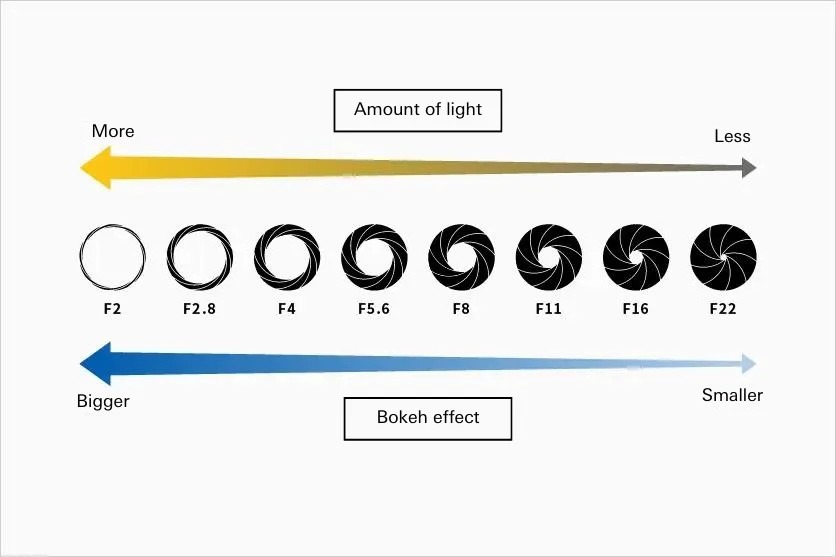
The figure comes from a simple piece of arithmetic. Divide the focal length of the lens (f) by the diameter of its effective aperture (D) and you have the f-number: F = f/D. Because the diameter sits on the bottom of that fraction, the relationship runs backwards from what most people expect on first encounter. A wider opening produces a smaller number. F2 lets in a great deal of light; F16 lets in very little. Once you have accepted that low means bright, the rest of the system falls into place quickly.
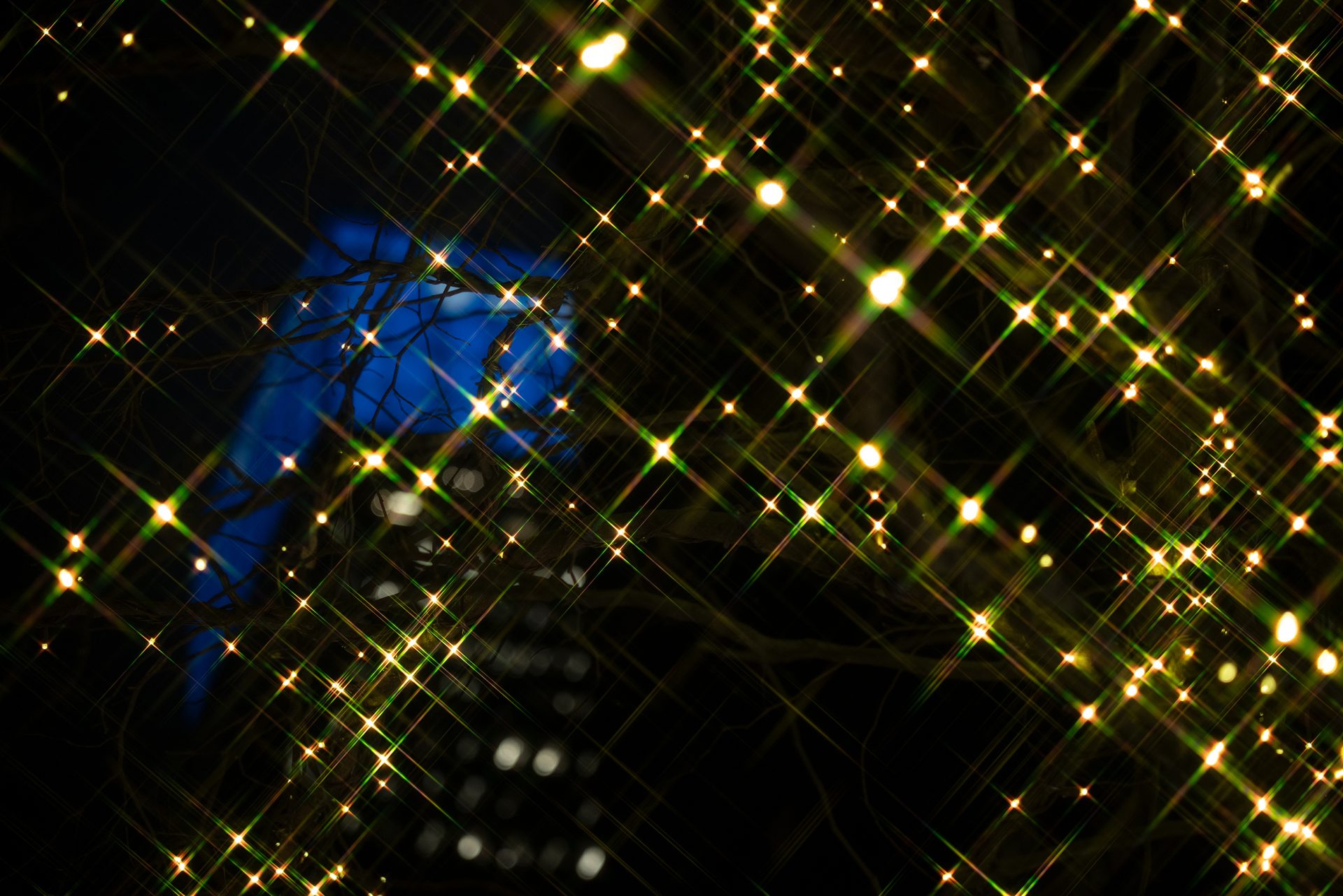
The shape of the opening matters as well as its size. Apertures fall broadly into two categories: those that close down into a polygon, and those engineered to stay close to a circle. The difference becomes obvious the moment you photograph small points of light thrown out of focus — harbour lights along the V&A Waterfront after dark, or the string of lamps running the length of the Durban beachfront promenade. A polygonal opening renders those points as hard-edged hexagons. A rounded one renders them as clean discs. Tamron builds its lenses with multi-blade diaphragms for precisely this reason, so that out-of-focus highlights keep their circular form rather than showing their edges.
Aperture tells you what a lens is capable of gathering, and it is usually the first decision worth making when you set up a shot. Everything else adjusts around it. Shutter speed has to move to keep the exposure balanced, and the amount of background separation you end up with is determined by this setting alone.
Consider photographing the Milky Way from the Karoo, where the galactic core arcs overhead through the winter months and there is nothing on the horizon to compete with it. A lens with a wide maximum aperture collects far more of that faint light in the same window of time. The extra light is worth having for reasons beyond simple brightness: it lets you keep the shutter open for a shorter period, and it lets you hold ISO down where the image stays clean. The same applies at blue hour looking across at Table Mountain from Bloubergstrand, when the light drops away faster than most people expect.
Push in the other direction and the constraints tighten. Narrow the aperture and less light arrives, so the shutter has to stay open longer, which invites camera shake unless the camera is on something solid. Raise ISO to compensate instead and noise starts creeping into the shadows. Neither penalty is severe in isolation. Both become obvious when you stack them.
The maximum aperture is the widest setting a lens offers — the smallest f-number it can reach. Photographers describe working at that setting as shooting wide open. It is printed on the barrel of every lens, and it is arguably the single most informative number in the specification.
A wide maximum aperture buys two things. It extends the range of conditions in which you can work at all, because there will always be evenings where the difference between F2.8 and F4 is the difference between a usable frame and a blurred one. And it gives you the shallowest depth of field the lens is capable of, which is the tool you reach for when you want a subject to lift cleanly away from a cluttered background.
This is why fast lenses command the prices they do. You are not paying for image quality in any straightforward sense — modest lenses can be excellent — but for the freedom to keep shooting as the light goes, and for control over how much of the frame stays sharp.
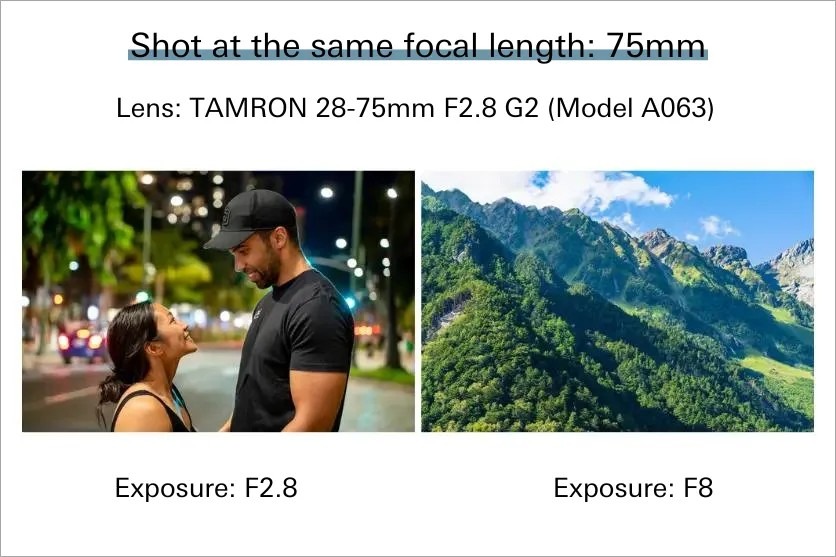
Change the aperture and the character of the image changes with it. Open up and the background softens; stop down and it hardens back into detail. The mechanism behind this is depth of field: the band of distance, running from somewhere in front of your subject to somewhere behind it, within which everything appears acceptably sharp.
A wide aperture produces a shallow depth of field. That band becomes narrow, sometimes only a few centimetres deep, and everything outside it falls away. A narrow aperture stretches the band out until it can run from the plant a metre in front of you to the mountains on the horizon.
The practical consequence is that you get to choose what the viewer looks at. Photograph someone standing in front of a Cape Dutch gable at F2 and the whitewashed curves behind them become a soft suggestion of shape — present, but clearly secondary. Photograph the Drakensberg escarpment at F11 and every ridge holds its edge, from the grass at your feet to the furthest peak.
Neither approach is more correct than the other. They are different instructions to the viewer, and knowing which one you are giving is most of what separates a considered photograph from an accidental one.
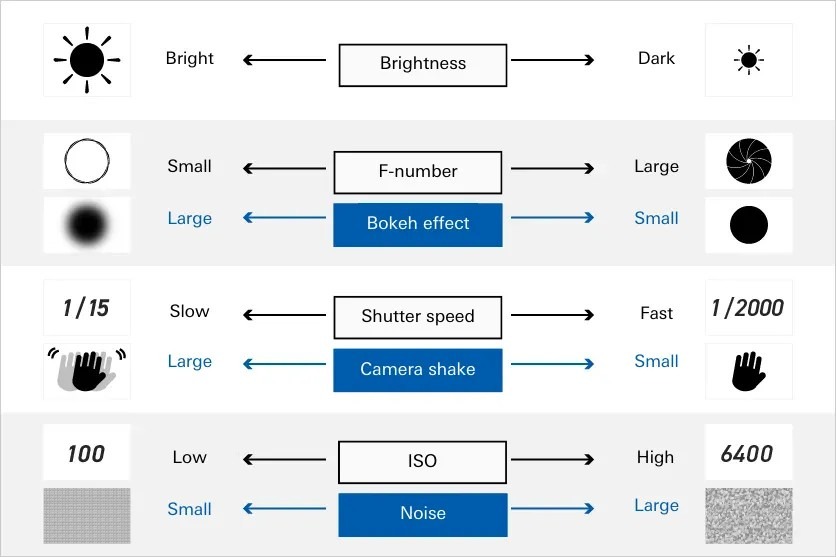
Aperture never operates alone. It sits alongside shutter speed and ISO in a relationship photographers call the exposure triangle, and moving any one of the three forces a compensating move somewhere else.
Open the aperture and more light reaches the sensor. You can spend that surplus in one of two ways: shorten the shutter speed, which suppresses both camera shake and subject movement, or lower the ISO, which keeps noise out of the image. Often you will do a little of each. The background separation you gain at the same time is a useful side effect.
Close the aperture and the arithmetic runs in reverse. Less light arrives, so the shutter must stay open longer, or ISO must climb, or both. Long exposures need support — a tripod, a low wall, a beanbag on a bonnet, whatever is to hand. High ISO settings are more forgiving on current sensors than they once were, but every camera has a point past which the image starts to fall apart, and finding your own limit is a matter of testing rather than reading.
One local wrinkle is worth flagging. On the Highveld in midsummer, or anywhere on the coast at midday, the problem is rarely a shortage of light — it is an excess. Shooting a portrait wide open at F1.8 under that sun can exceed the fastest shutter speed the camera offers. Most bodies now include an electronic shutter that runs faster, and a neutral density filter solves it outright, but it catches people out.
Aperture priority mode — marked A or Av on most mode dials — hands you control of the aperture and lets the camera work out the shutter speed. For anyone still building confidence with manual settings, it is the sensible place to begin, because it isolates the one decision that matters most and automates the rest.
The behaviour is predictable once you have watched it a few times. Choose a small f-number and the camera selects a fast shutter speed. Choose a large one and the shutter slows down accordingly. If the displayed shutter speed drops to a point where you are not confident of holding the camera steady, open the aperture back up until it recovers.
The mode earns its keep in changeable light. Moving from deep shade under an oak into open sun, which happens constantly on a Stellenbosch wine estate or walking through the Company’s Garden, the camera adjusts continuously while your chosen depth of field stays exactly where you set it.
Most zoom lenses have a maximum aperture that shifts as you zoom. A lens marked F4.5-6.3 offers F4.5 at the wide end and only F6.3 once you have zoomed all the way in. Zoom in and you lose light, whether you intended to or not.
A constant aperture lens holds the same maximum throughout the range. The advantage is consistency. Your exposure does not shift as you recompose, so shutter speed and ISO stay where you put them, and you keep the full light-gathering ability of the lens at the telephoto end where you often need it most.
This matters wherever you are working through a range of focal lengths without time to reset between frames — the touchline at Loftus Versfeld or Kings Park, moving from a wide shot of the lineout to a tight frame on the ball carrier, or a walk along the Cape Peninsula where the composition changes every few hundred metres. It is the main reason constant aperture zooms are standard issue among working professionals.
17-50mm F/4 Di III VXD (Model A068)
The 17-50mm F/4 Di III VXD (Model A068) is the world’s first lens to run from an ultra-wide 17mm through to a standard 50mm. Compact and built for Sony E-mount full-frame mirrorless bodies, it holds F4 across the entire zoom range and suits stills and video equally well. From wide coastal landscapes to gatherings indoors, it covers most of what a day asks of a lens.
There is no aperture that works for everything. The right setting depends on the subject, the available light and what you want the finished image to say. Having a starting point in mind before you lift the camera means you spend your time composing rather than hesitating over settings.
The broad principle is straightforward. When the subject is the point and the background is not, open up. When the scene itself is the subject and you want it sharp from edge to edge, stop down. What follows are working starting points for five common situations, along with the lenses that suit them.
Portrait photography relies on separation. Softening what sits in front of and behind your subject pulls them forward out of the frame, so portraits are usually shot at or near the maximum aperture.
As a rule of thumb, F2.8 on a standard zoom and F1.4 on a prime will give you the look most people are after. Working this close to wide open maximises the background blur and keeps attention where you want it.
The lens makes a substantial difference here. The Tamron 35-150mm F2-2.8 Di III VXD (Model A058) covers wide-angle through to telephoto in a single barrel and opens to F2 at 35mm, closing only to F2.8 at 150mm. In practice that means you can move from an environmental portrait showing the whole stoep to a tight head-and-shoulders frame without changing lenses — useful at a braai, where the light is good and nobody holds still for long.
All that light also gives you room to manoeuvre. Even with a fast shutter speed to eliminate shake and a low ISO to keep the file clean, the exposure holds. That matters in the last half hour before sunset, when the light is at its best and disappearing quickly.

TAMRON 35-150mm F2-2.8 (Model A058) Focal length: 35mm Exposure: F2 Shutter Speed: 1/800sec ISO: 200 Camera: Sony α7R IV
35-150mm F/2-2.8 Di III VXD (Model A058)
The 35-150mm F/2-2.8 Di III VXD (Model A058) is a high-resolution travel zoom covering 35mm wide-angle through to 150mm telephoto, and the first zoom lens to reach F2 at its wide end. Its fast aperture is paired with VXD (Voice-coil eXtreme-torque Drive) linear motor focusing for rapid, precise autofocus. The design improves grip and handling considerably, and Tamron’s in-house software allows straightforward function customisation and firmware updates.
Landscape work asks the opposite of portraiture. You want detail holding right across the frame, from the fynbos at your feet to the ridgeline behind it, which means a deeper depth of field and a narrower aperture. F8 to F11 is the range most landscape photographers live in, and it is where the majority of lenses perform at their sharpest.
Resist the urge to keep stopping down beyond that. Past roughly F16, diffraction begins to soften the whole image — light bending around the edges of a very small opening — and you lose more detail than the extra depth of field gains you. If you need more front-to-back sharpness than F11 provides, moving back or refocusing usually solves it better than F22 will.
The seasons here reward planning. Jacarandas turn Pretoria purple through October and November, the Namaqualand daisies open across the Northern Cape in August and September, and the Cederberg’s proteas and fynbos hold interest year-round. Because the Southern Hemisphere calendar runs opposite to the one assumed in most photography guides, our best low-angle light for landscapes falls in June and July, when the sun stays low enough to give texture well into the middle of the day.

TAMRON 50-400mm F4.5-6.3 (Model A067) Focal length: 50mm Exposure: F8 Shutter Speed: 1/500sec ISO: 100 Camera: Sony α7R IV
50-400mm F/4.5-6.3 Di III VC VXD (Model A067)
The 50-400mm F/4.5-6.3 Di III VC VXD (Model A067) is an ultra-telephoto zoom for full-frame mirrorless cameras, offering an 8x range that begins at a genuinely useful 50mm rather than further along. Image quality holds across the full 50-400mm span, yet the lens stays as compact and light as a typical 100-400mm. The VXD focus drive and VC stabilisation track movement quickly, which suits sport and birdlife equally. It combines reach and mobility in a way few lenses in its class manage.
Night photography has more in common with landscape work than it might first appear. You are still after detail holding across the frame — the lights of the Cape Town city bowl seen from Signal Hill, or the Johannesburg skyline from Northcliff Hill once the sun has gone — so F8 to F11 remains the sensible starting range.
What changes is everything around the aperture. At F8 very little light reaches the sensor, so the exposure has to come from somewhere: a longer shutter speed, a higher ISO, or a combination of both. A tripod stops being optional at this point, since exposures measured in whole seconds are well beyond what anyone can hold steady. Push ISO too hard to avoid carrying one and noise fills the shadows, which is where most of a night scene lives.
Timing helps more than most people expect. The half hour after sunset usually beats full darkness, because a residual blue in the sky separates buildings from the background and keeps the contrast range manageable. Moses Mabhida Stadium and the Golden Mile in Durban both photograph well in exactly that window.
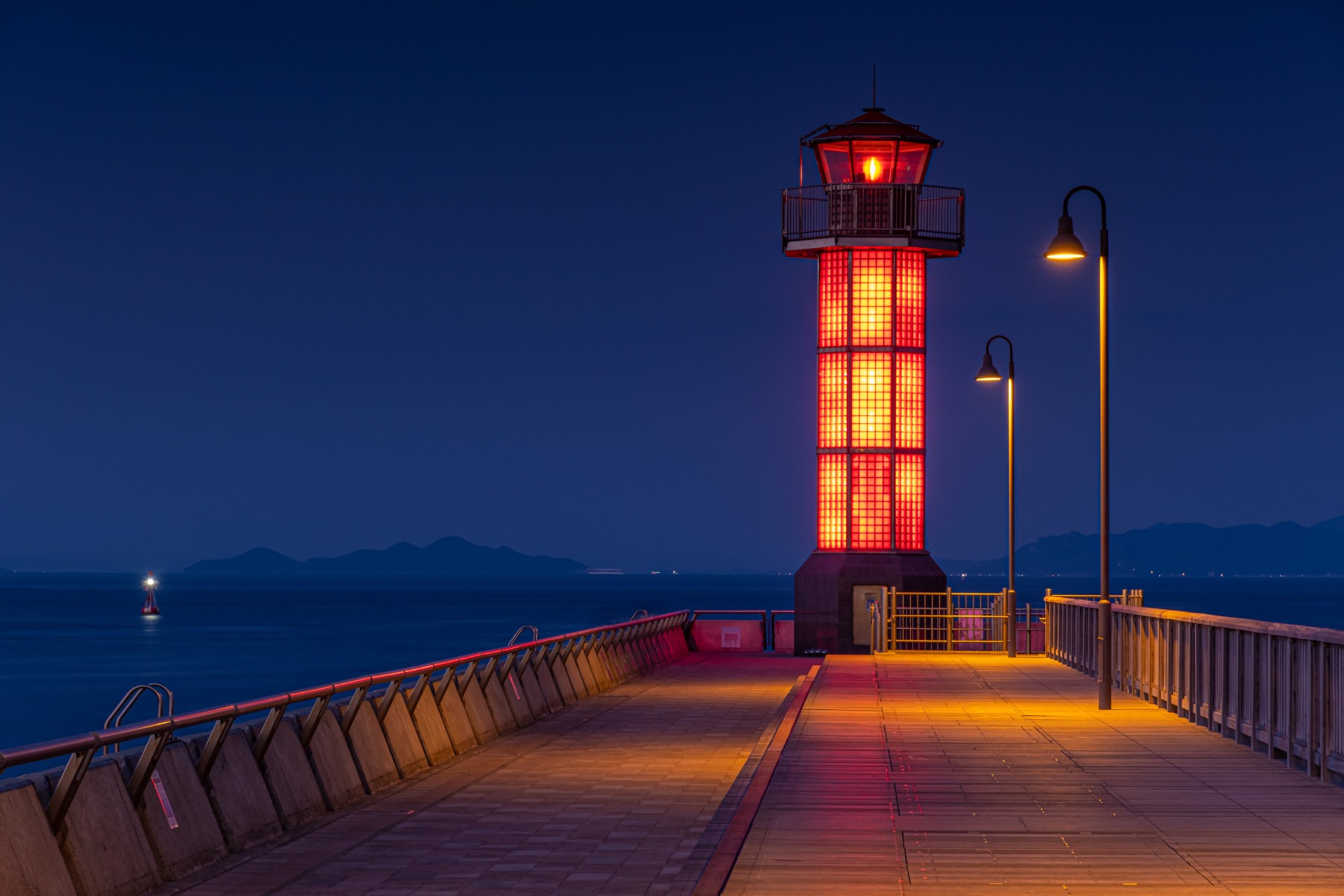
TAMRON 17-70mm F2.8 (Model B070) Focal length: 70mm Exposure: F8 Shutter Speed: 15sec ISO: 160 Camera: FUJIFILM X-T4
17-70mm F/2.8 Di III-A VC RXD (Model B070)
The 17-70mm F/2.8 Di III-A VC RXD (Model B070) is a large-aperture standard zoom for APS-C mirrorless cameras, covering 17mm to 70mm — equivalent to 25.5-105mm on full frame — for a 4.1x range that handles most everyday shooting. The optical design maintains resolution and contrast into the corners and edges, not just at the centre. A quiet AF motor and VC stabilisation make handheld work comfortable, while suppressed focus breathing keeps creative intent intact in video. A highly practical lens that puts a constant F2.8 within easy reach for stills and video alike.
Stars are faint and there is no way to add light to them, so astrophotography inverts the advice above. Here you work at or close to the maximum aperture — F2 to F2.8 — and gather everything the lens will pass. That is what allows the Milky Way, shooting stars and distant point sources to register with any real brilliance.
South Africa is unusually well placed for this. The Karoo offers some of the darkest skies reachable by road anywhere, which is why Sutherland was chosen to host the Southern African Large Telescope. The galactic core sits high overhead from roughly May through September, the Southern Cross is visible year-round from anywhere in the country, and both the Cederberg and the northern Drakensberg work well as bases.
ISO and shutter speed follow the same logic as night photography, with one addition: the Earth is turning. Leave the shutter open too long and stars stop being points and start becoming short trails. A rough starting guide is to divide 500 by your focal length for a maximum exposure in seconds — around 25 seconds on a 20mm lens — though the exact figure depends on your sensor and how closely you inspect the result. Expect several test frames before you land on the combination you want.
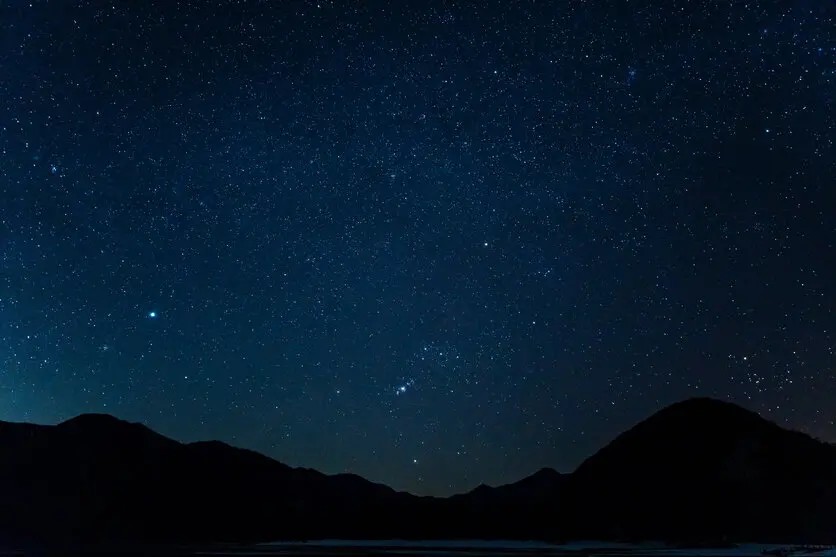
TAMRON 11-20mm F2.8 (Model B060) Exposure: F2.8 Shutter Speed: 10sec ISO: 1000 Focal length: 20mm
11-20mm F/2.8 Di III-A RXD (Model B060)
The 11-20mm F/2.8 Di III-A RXD (Model B060) is the world’s first compact, lightweight F2.8 ultra-wide-angle zoom built for Sony E-mount APS-C mirrorless cameras. The combination of a wide field of view and a fast constant aperture also makes it a strong choice for video.
School sport fills a large part of the South African calendar, and an athletics day at the end of term, a Saturday morning of junior rugby or an interhouse gala all produce photographs families keep for decades. Beyond pictures of one child, most people want frames that hold a group together and wider shots carrying the atmosphere of the day.
That argues against shooting wide open. A slightly stopped-down aperture of F4 to F8 widens the depth of field enough to keep several children sharp at once rather than only the one you focused on, and it leaves the spectators behind them readable instead of reduced to a smear.
Movement is the other consideration. Nobody on a track pauses for the camera, so lift ISO a little and spend it on a faster shutter speed — 1/1000 sec or quicker will freeze most of what happens on a school field, preventing both subject blur and camera shake. Bright local daylight makes this easier than it sounds; on a clear day in Gauteng or the Free State you will usually have light to spare.

TAMRON 70-300mm F4.5-6.3 (Model A047) Focal length: 70mm Exposure: F4.5 Shutter Speed: 1/1250sec ISO: 500
70-300mm F/4.5-6.3 Di III RXD (Model A047)
The 70-300mm F/4.5-6.3 Di III RXD (Model A047) is a telephoto zoom for full-frame mirrorless cameras, designed so photographers at any level can work comfortably with a long lens. It covers a broad telephoto range while remaining the smallest and lightest in its class. Tamron has prioritised resolving power, placing specialised elements to correct the chromatic aberration telephoto designs are prone to, along with other aberrations. The result pairs high-resolution detail with the bokeh only a long lens produces. The RXD autofocus drive is fast, precise and notably quiet. It suits landscapes, sport, pets and wildlife, and holds its own for portraits, casual shooting and any situation that asks you to stay mobile and handheld.
A photograph carries the impression it does for many reasons, but aperture touches nearly all of them — brightness, sharpness, separation, mood. Balancing it against shutter speed and ISO is the whole of exposure, and learning to anticipate what an f-stop will do before you set it is most of the work.
None of this needs to be memorised. Photograph the same scene at F2.8, F5.6 and F11 and compare the three, and the relationship will settle into place faster than any amount of reading. Then go out with a starting point in mind and adjust from there — a stoep portrait at dusk, the Karoo sky in June, a school athletics track in October. Each asks something slightly different of you, which is the interesting part.