| September 18, 2026
 South Africa's #1 Mobile Protection Brand
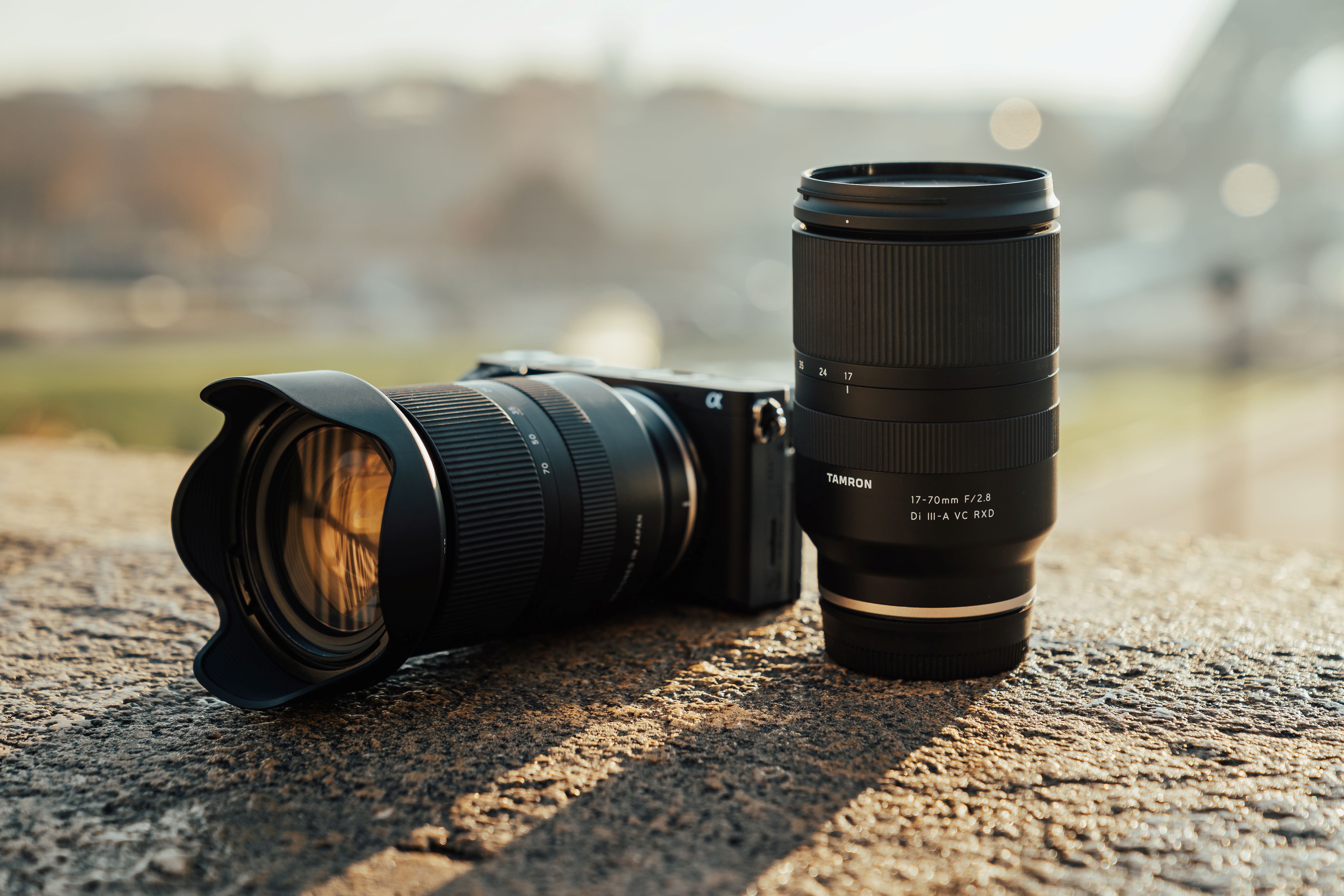
Walk into any camera club meeting in Cape Town, Johannesburg or Durban and count the bodies on the table. Most of them will be built around an APS-C sensor. It is the format that carries the majority of South African photographers from their first interchangeable-lens camera through to paid work, and plenty of professionals never feel the need to move on from it.
The reasons are practical. An APS-C sensor camera is smaller, lighter and easier on the budget than a full-frame equivalent, and the crop it applies gives you extra reach on distant subjects without buying a longer lens. But the format also behaves differently in ways that catch people out, particularly around depth of field and low-light performance, and the lens you pair with it needs to be chosen with those differences in mind.
This guide covers what an APS-C sensor actually is, how it compares with full-frame across the areas that matter, where it outperforms the bigger format, and how to pick a lens that gets the most out of it.
An APS-C sensor is one of the standard image sensor formats used in interchangeable-lens cameras. The name is inherited from film: the Advanced Photo System type-C frame measured roughly 24 x 16 mm, and the digital sensors that replaced it landed in the same neighbourhood.
There is no single locked-down specification, so the exact dimensions shift slightly depending on who built the camera. Most APS-C sensors sit somewhere between roughly 23.6 x 15.8 mm and 22.3 x 14.9 mm. That variation is small enough that it almost never decides a purchase, but it does change the crop factor by a fraction, which matters when you are calculating effective focal lengths for a telephoto lens.
Everything else about the format — the angle of view, the depth of field, the noise behaviour, the size of the kit — follows from those dimensions.
Full-frame and APS-C are the two formats most South African photographers will choose between. They differ in six areas: physical sensor size, angle of view, background blur, dynamic range, high-ISO performance, and the size and weight of the resulting kit. Each one has a practical consequence for the way you shoot.
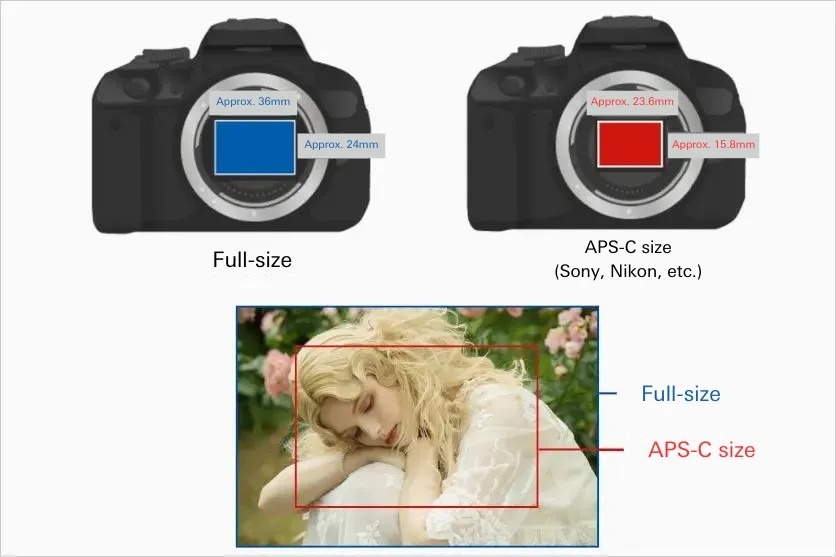
A full-frame sensor measures approximately 36 x 24 mm. An APS-C sensor measures approximately 23.6 x 15.8 mm. Put another way, the full-frame surface is a little over twice the area of the APS-C surface.
That is the entire source of the difference between the two formats. Every point below is a downstream effect of that one measurement.
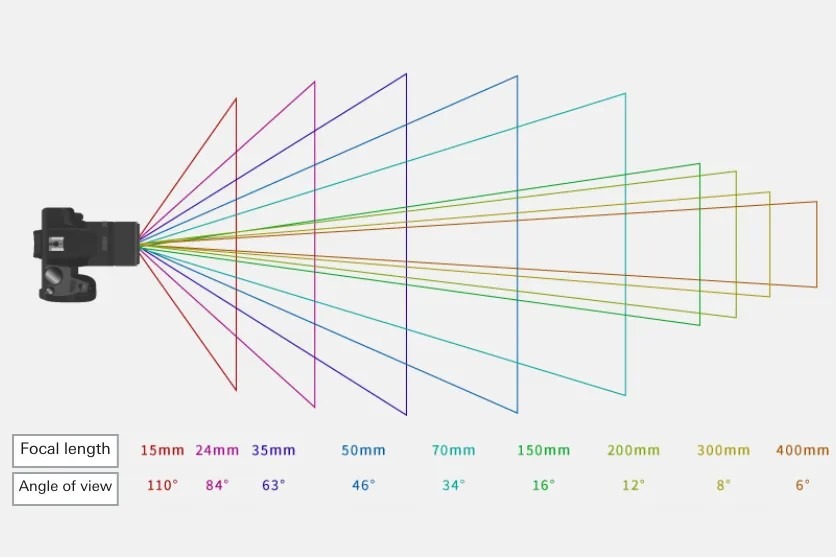
Fit the same lens to an APS-C body and a full-frame body, stand in the same spot, and the APS-C frame will be tighter. The smaller sensor sits behind the same optical circle and simply receives less of it, so the edges of the scene fall outside the recorded frame.
The result is that subjects appear roughly 1.5 to 1.6 times larger in the frame than they would on full-frame. This is often described as a telephoto effect, which is a useful shorthand but slightly misleading — nothing is being magnified. You are seeing a tighter crop of the same optical image. The practical benefit is identical either way: more subject, less empty surroundings.
Photograph the same subject at the same angle of view on both formats and the full-frame image will show softer, more pronounced background blur. The APS-C sensor produces a deeper depth of field for the same framing.
Depth of field is the zone in front of and behind your focus point that still reads as acceptably sharp. Because APS-C keeps more of that zone in focus, backgrounds separate less dramatically from the subject. Whether that counts as a drawback depends entirely on what you are photographing — it is a limitation for tight portraits and an advantage for almost everything where you want depth held together.
Dynamic range describes the span between the brightest and darkest values a sensor can record in a single exposure. A wider dynamic range means fewer blown highlights, fewer crushed shadows, and smoother tonal transitions between the two.
As a general rule, the larger the sensor, the wider the dynamic range. Full-frame therefore tends to hold gradation more gracefully than APS-C, because each photosite gathers more light. This shows up most clearly in high-contrast conditions — a Highveld thunderstorm with sunlit grassland beneath a black cloud base is exactly the scene that separates the two formats.
Modern APS-C sensors handle this far better than they did a decade ago, and careful exposure closes most of the remaining gap.
In dark conditions you raise ISO to hold a usable shutter speed, and past a certain point noise becomes visible. Because a full-frame sensor collects more light across its larger surface, it generally produces cleaner files than APS-C at the same ISO setting.
That advantage is real, but it is often overstated. The sensitivity ceiling on current APS-C bodies is high enough for indoor sport, evening events and night sky work, provided you expose accurately rather than relying on recovery in editing.
Smaller sensors allow smaller bodies and smaller lenses. An APS-C kit is usually lighter and more compact than the full-frame equivalent, which matters on a long hike up the Drakensberg escarpment, on a full day covering a school athletics meeting, or any time luggage allowance is the limiting factor.
One caveat: compact full-frame bodies now exist, so format alone no longer dictates size. The lenses are where the difference remains most consistent — glass designed for the smaller image circle is genuinely smaller and lighter.
Beyond simply costing less, the format has strengths a full-frame body cannot match. Three stand out.
The tighter angle of view means your subject fills more of the frame from the same distance. For anyone photographing birds, or sport from the far side of a field, that is free reach — the equivalent of a longer lens you did not have to buy or carry.
This is why some working photographers keep an APS-C body in the bag alongside a full-frame one, switching to it when the subject is simply too far away.
Lighter bodies and lighter lenses change what you are willing to take with you. A kit you can carry all day on foot is a kit that produces more photographs than one you leave in the car. For travel, hiking and long walking days in a city, the weight saving compounds.
APS-C cameras are generally more affordable than full-frame, which lowers the barrier for anyone moving up from a phone to an interchangeable-lens system. That matters more than it sounds: skill comes from volume, and the camera you can afford and are happy to carry is the one that gets used.
A common assumption is that APS-C files are visibly inferior to full-frame. In practice, at normal viewing sizes, the difference is hard to identify without pixel-level comparison. Here are the situations where an APS-C sensor camera is not just adequate but genuinely the better tool.

TAMRON 17-70mm F2.8 (Model B070) Focal length: 70mm Exposure: F2.8 Shutter Speed: 1/125sec ISO: 125
The tighter angle of view helps you isolate a person from a busy background — useful on a crowded Cape Town pavement or in the inner city of Johannesburg, where cutting out visual clutter is half the work. Under the jacarandas in Gauteng in late October, the same crop lets you fill the frame with colour without stepping into the road.
For informal portraits, family gatherings and walking around town, an APS-C body with a fast standard zoom is about as versatile as a single-lens setup gets.
Covering a school athletics meeting means photographing people who are a long way off and moving quickly. The reach advantage of an APS-C sensor does the heavy lifting here: from the stands you can fill the frame with a single competitor rounding the bend, without a lens that needs its own bag.
The same holds for cricket from the boundary, rugby and netball from the touchline, and hockey from behind the goal. The lighter body also matters over a long afternoon — fatigue costs you more frames than any specification difference.
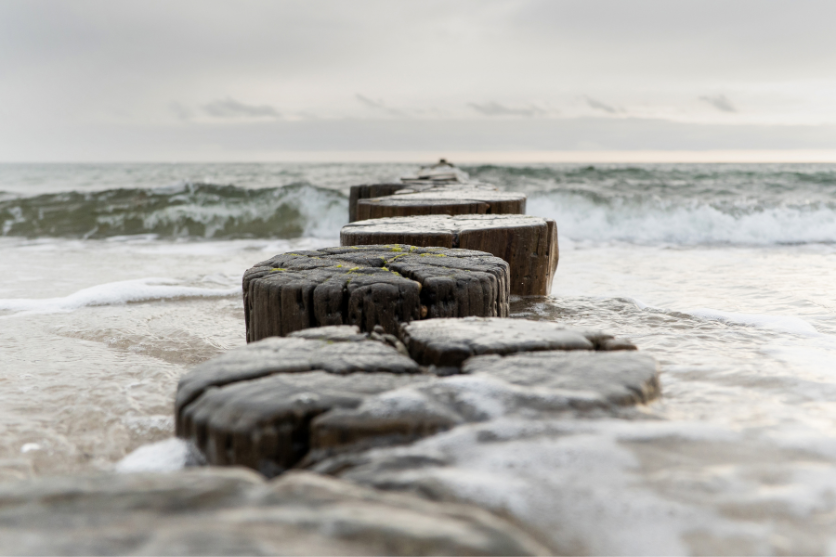
TAMRON 11-20mm F2.8 (Model B060) Focal length: 18mm Exposure: F3.5 Shutter Speed: 1/400sec ISO: 500
The deeper depth of field that limits background blur becomes an asset in landscape work. You can hold foreground and distant detail sharp together at a relatively wide aperture, which keeps shutter speeds up in wind — a constant along the Western Cape coast.
The tighter angle of view also suits a different approach to landscape: instead of trying to include everything, pick the one element that carries the scene. A single ridge line on the Drakensberg escarpment, a stand of trees against Highveld grassland, or the pattern of surf on a Cape beach will often say more than the wide view.
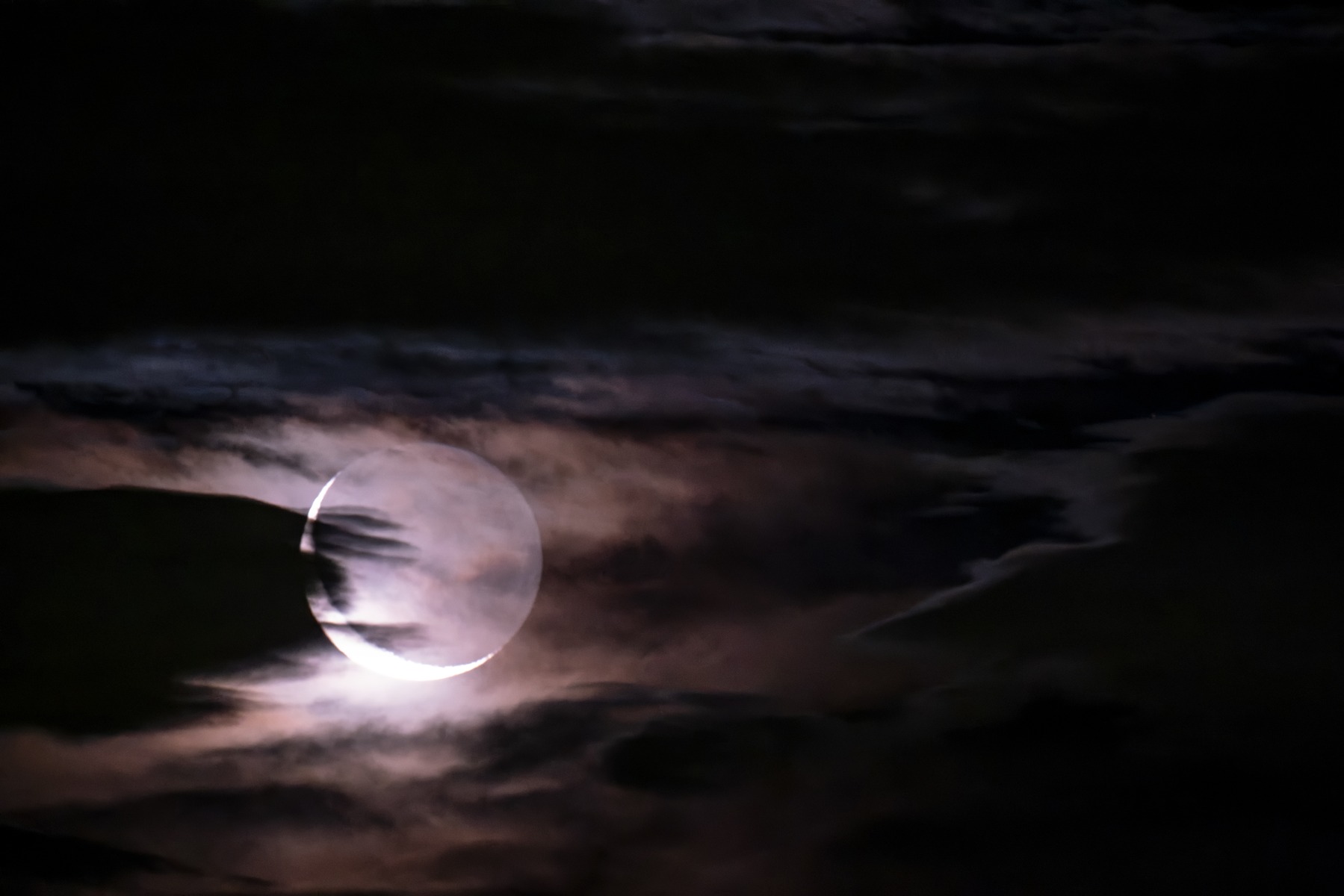
TAMRON 150-500mm F5-6.7 (Model A057) Focal length: 500mm Exposure: F6.7 Shutter Speed: 1sec ISO: 6400
Night sky photography is widely assumed to require full-frame because of the high ISO involved. It does not. An APS-C sensor camera produces perfectly usable results, and the narrower angle of view is an advantage when the moon or a specific constellation is the subject rather than the sky as a whole.
South Africa is unusually well placed for this. The Karoo interior offers some of the darkest skies accessible by road anywhere, and the Magaliesberg is within easy reach of Gauteng for a night out under reasonably clear skies. The fundamentals do not change with format: set exposure manually, use a tripod, and work out your shutter speed against the focal length before the stars start trailing.
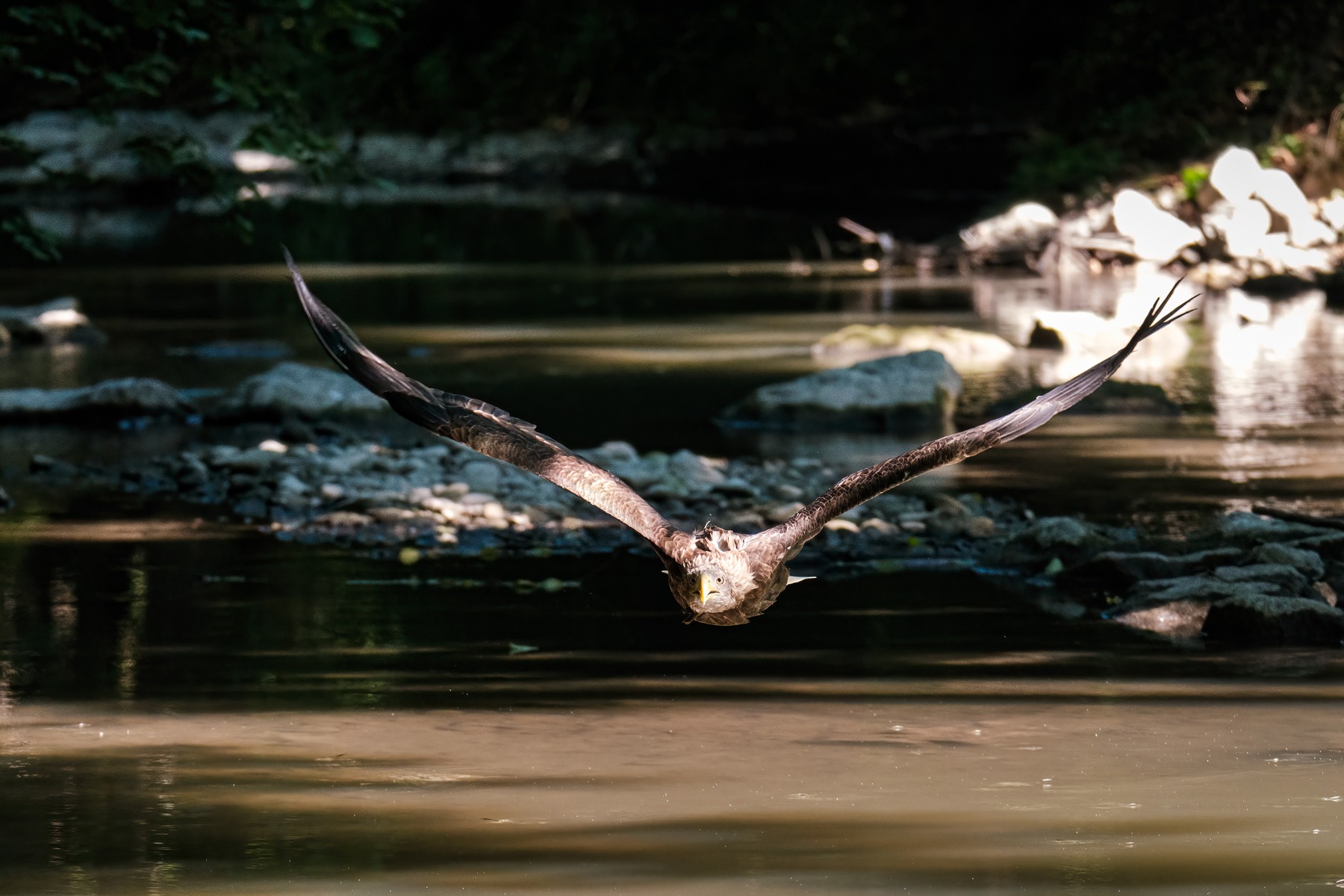
TAMRON 150-500mm F5-6.7 (Model A057) Focal length: 214.4mm Exposure: F5 Shutter Speed: 1/1000sec ISO: 10000
Birds are the clearest case for APS-C. Bird photography generally starts at around 300 mm in 35mm-equivalent terms and usually wants more. The TAMRON 150-500mm F5-6.7 (Model A057) on an APS-C body delivers an angle of view equivalent to roughly 225-750 mm, which is serious reach for a lens you can still hand-hold.
That reach translates directly into working distance. You can photograph from far enough away that the bird carries on behaving normally instead of flushing. On the wetlands and lagoons of the Western Cape, along the KwaZulu-Natal coastline, or across Highveld grassland, that extra separation is often the difference between a photograph and an empty branch. The lighter body helps too — birds rarely give you time to reposition.
Once the body is chosen, the lens does most of the work. These are the specifications worth checking before you buy.
Lenses for interchangeable-lens cameras are designed around a specific image circle: some cover full-frame, others are built for the smaller APS-C frame.
A full-frame lens will work on an APS-C body without any issue — you simply use the central portion of the image circle, and the crop factor applies as normal. An APS-C lens on a full-frame body is the problem case: the image circle is too small to fill the sensor, so you either get dark corners or the camera automatically crops to a smaller file. If you expect to move to full-frame later, that is worth factoring into what you buy now.
Because the two formats frame differently at the same focal length, angle of view is usually quoted as a 35mm-format equivalent. Multiply the marked focal length by roughly 1.5 to 1.6 to get the full-frame equivalent.
The exact multiplier depends on the camera. The table below uses 1.55x as a worked example, with the equivalent figure in brackets.
|
Classification |
Focal length on APS-C (35mm equivalent) |
|
Wide angle |
10 mm (equivalent to 16 mm) |
|
Wide angle |
24 mm (equivalent to 37 mm) |
|
Standard |
35 mm (equivalent to 54 mm) |
|
Standard |
50 mm (equivalent to 78 mm) |
|
Telephoto |
70 mm (equivalent to 109 mm) |
|
Telephoto |
90 mm (equivalent to 140 mm) |
|
Telephoto |
150 mm (equivalent to 233 mm) |
|
Ultra-telephoto |
300 mm (equivalent to 465 mm) |
|
Ultra-telephoto |
400 mm (equivalent to 620 mm) |
|
Ultra-telephoto |
600 mm (equivalent to 930 mm) |
The f-number indicates how much light the lens passes through to the sensor. A smaller number means a wider aperture and a brighter lens. The smallest available figure is the maximum aperture.
A brighter lens gives you two things: the ability to keep shutter speeds up in poor light, and more control over background blur — which is worth having on APS-C precisely because the format works against you there. Indoor sport, evening events and dawn starts are all easier with a wide maximum aperture.

TAMRON 17-70mm F2.8 (Model B070) Focal length: 58mm Exposure: F2.8 Shutter Speed: 1/320sec ISO: 400
Minimum object distance is the closest a subject can be to the camera's sensor and still be brought into focus. Move closer than that figure and the lens simply will not focus.
A short minimum object distance opens up close-up work without a dedicated macro lens — flowers, insects, food, jewellery, small details of texture. If you want one lens covering the widest range of subjects, this is a specification worth comparing carefully.
In a zoom lens, the zoom ratio is the telephoto focal length divided by the wide-angle focal length. The TAMRON 18-300mm F3.5-6.3 (Model B061), for example, gives 300 ÷ 18 = 16.6x.
A higher ratio means one lens covers more ground, which reduces changes in the field and keeps dust off the sensor. If versatility is the priority — travel, general family photography, a day out with no clear plan — a high zoom ratio earns its place.
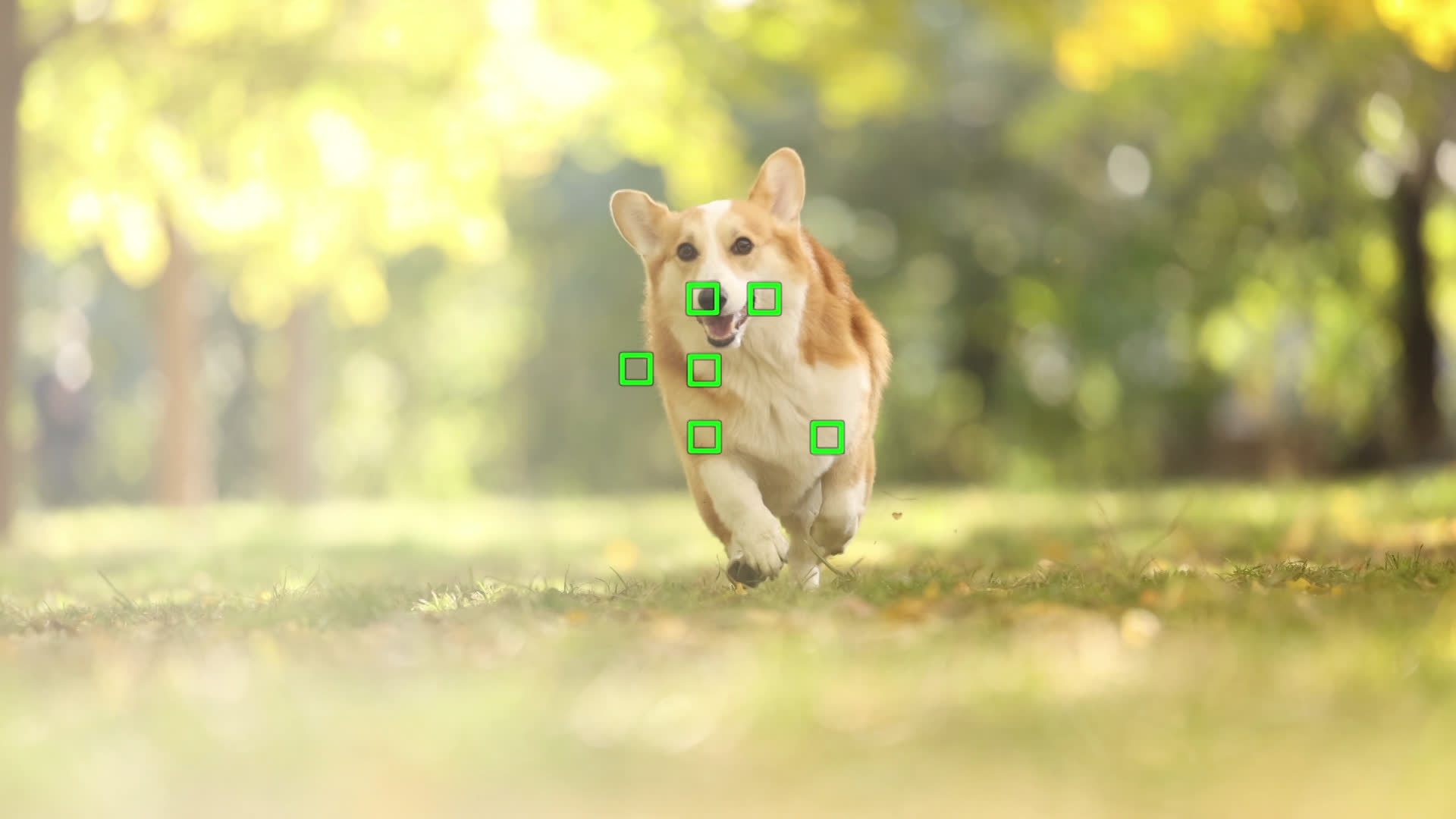
Autofocus speed and accuracy decide whether you get the shot at all with a moving subject. Check that the lens acquires focus without hunting and tracks reliably once it has locked on.
This matters most for sport, children and animals. If you shoot video as well, check how quietly the focus motor runs — a noisy lens will put itself on the soundtrack.
APS-C bodies are frequently used for telephoto work, and long focal lengths amplify every small movement of the camera. In-lens stabilisation — TAMRON calls its system Vibration Compensation, or VC — counteracts that movement and buys you several usable stops.
It earns its keep any time a tripod is impractical: handheld in the field, tracking a bird in flight, or working from a spectator seat where there is no room to set up.
An APS-C sensor camera is not a compromised version of a full-frame one. It is a different set of trade-offs — less background blur and slightly less headroom in extreme light, in exchange for more reach, less weight and a lower price.
For a great deal of South African photography, that trade lands in your favour. Match the body to a lens chosen around how you actually shoot, and the format will take you a very long way.