| September 18, 2026
 South Africa's #1 Mobile Protection Brand

If your kit is built around prime lenses, or you have gone all-in on a wide-angle for landscapes and a telephoto for wildlife, it is fair to ask whether a standard zoom lens still deserves space in your bag. Plenty of photographers get by without one. But the standard zoom lens has remained the most-used lens in photography for a reason, and that reason tends to announce itself the first time you are halfway up Lion's Head, or standing on a gravel road in the Karoo, with the wrong glass on the camera. This article looks at what a standard zoom lens does well, the shooting situations where it makes the most sense, and what to check before you buy one.
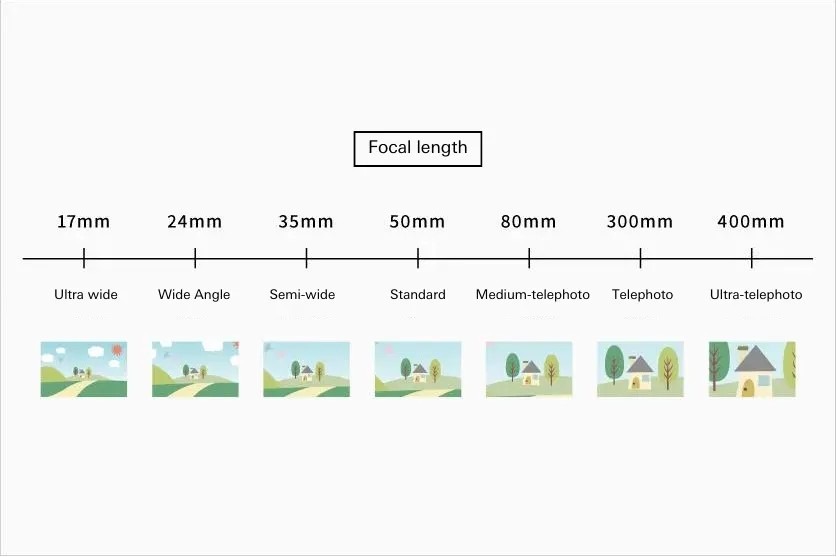
Roughly 50mm is what the industry calls the standard focal length. A standard zoom lens is simply a zoom built around that point, and most cover the wide-angle end through to short telephoto, letting you move between framings without swapping glass.
The name comes down to how the range sees. At around 50mm the angle of view sits close to the way we take in a scene ourselves, so images shot there feel natural rather than stretched or compressed. A 35mm or 50mm prime gives you a similar look, but with one fixed framing that cannot be widened or tightened.
For context, a wide-angle zoom usually tops out near 35mm and pulls in far more of the scene, which is why it suits sweeping Drakensberg views and tight interiors. A telephoto zoom starts from about 80mm upwards and brings distant subjects closer with a narrow angle of view, the lens you would want in Kruger or in the stands at Newlands. A standard zoom lens sits neatly in the gap between the two.
The scepticism is understandable. There are two common setups in which a standard zoom lens can genuinely feel like a duplicate, and both are worth unpacking honestly.
If a 35mm and a 50mm already live in your bag, a standard zoom lens covers ground you technically have covered. Primes earn their following: maximum apertures of f/1.4 or f/2.8 are common, the out-of-focus rendering is lovely, and a simpler optical design keeps them small and light.
The trade-off is that your feet become the zoom ring. Sometimes that is a useful discipline, because working a scene on foot teaches composition faster than almost anything else. Sometimes it is simply a problem: on a raised boardwalk at Kirstenbosch, in a packed weekend market, or standing where a wedding coordinator has asked you to stay put. Covering the wide and long ends as well means carrying several lenses and swapping between them at exactly the wrong moment.
A standard zoom lens lets you change framing from where you are already standing. TAMRON's standard zooms are engineered to hold onto what photographers value in primes, including resolving power, pleasing bokeh, low weight and a compact body, so the convenience does not cost you image quality.
If you shoot one defined subject, say landscapes along the Garden Route or school rugby on a Saturday morning, you may already run a wide-angle for the establishing frames and a telephoto for the action, with nothing in between. Because a wide-angle zoom's long end and a telephoto zoom's short end each reach partway into standard territory, the range does get covered after a fashion.
Covered is not the same as optimised. A standard zoom lens is designed to perform at its best across precisely those focal lengths, rather than at the stretched extremes of another lens's range. For portraits, street frames and the table at a Sunday braai, anything where you want the distance and mood to match what your own eye saw, the middle of the range is where the picture actually lives.

With the objections dealt with, here is what a standard zoom lens gives you day to day, mostly measured against a prime.
A standard zoom lens does not sit only at the middle of the standard range. It reaches out in both directions, borrowing some of the wide-angle zoom's breadth at one end and some of the telephoto's reach at the other, all on one mount.
Primes are superb at building atmosphere through shallow depth of field, but a fixed angle of view limits you when the subject sits at an awkward distance, or when the landscape in front of you needs either more or less of the frame than the lens will give. A standard zoom lens adapts instead of dictating.
Once you start shooting, ideas arrive faster than you can walk. You see the frame you actually want a second after you have taken the safe one, and often you cannot get to it, because there is a fence, a queue, a cliff edge on Chapman's Peak, or a security cordon between you and the better angle.
With a prime, closing or opening that gap means physically repositioning while judging the framing on the move. Shallow depth of field makes it less forgiving still, and beginners in particular lose shots to missed focus and half-committed positions. A standard zoom lens keeps the adjustment in your left hand, which is often the difference between getting the frame and watching it go.
Anyone who has packed a bakkie for a week on the Wild Coast, or squeezed a bag into an overhead locker on a domestic hop to Durban, knows that camera gear is the first thing to get cut. The lens that handles the widest spread of situations is the lens that survives the pack. Because a standard zoom lens moves comfortably between street scenes, portraits and landscapes, you can leave the rest at home and still come back with a full set of images. It remains one of the best travelling companions in photography.
A standard zoom lens will photograph almost anything with one piece of glass, which is exactly why it is such a strong first upgrade. These are the scenarios where it consistently outperforms the alternatives.

TAMRON 28-75mm F2.8 G2 (Model A063). Focal length: 64mm. Exposure: F2.8. Shutter speed: 1/40 sec. ISO: 100.
The appeal of a standard zoom lens here is that it renders a scene close to the way you saw it while still separating your subject from the background. That makes it a natural fit for unposed portraits and for everyday street work: the painted facades of the Bo-Kaap, a Saturday morning at the Neighbourgoods Market, friends around a table as the light goes. Because you can shift the framing, you also control exactly how much context sits behind your subject and how softly it falls away.

TAMRON 28-75mm F2.8 G2 (Model A063). Focal length: 75mm. Exposure: F2.8. Shutter speed: 1/1600 sec. ISO: 100. Camera: Sony a1.
Wide-angle glass is the obvious tool for scale, and it is what you would reach for to hold the full sweep of the Blyde River Canyon or a Johannesburg skyline in one frame.
A standard zoom lens does something different. It gives the viewer the sense of standing there rather than looking at a poster. Where a wide-angle can tip a scene towards the cinematic, the standard range keeps it honest, which is what you want when the subject is the feel of a place: jacarandas coming into flower along a Pretoria street in late October, morning mist lifting off the Hogsback hills, a quiet arcade in Braamfontein before the shops open.

TAMRON 28-75mm F2.8 G2 (Model A063). Focal length: 75mm. Exposure: F4. Shutter speed: 1/1000 sec. ISO: 100.
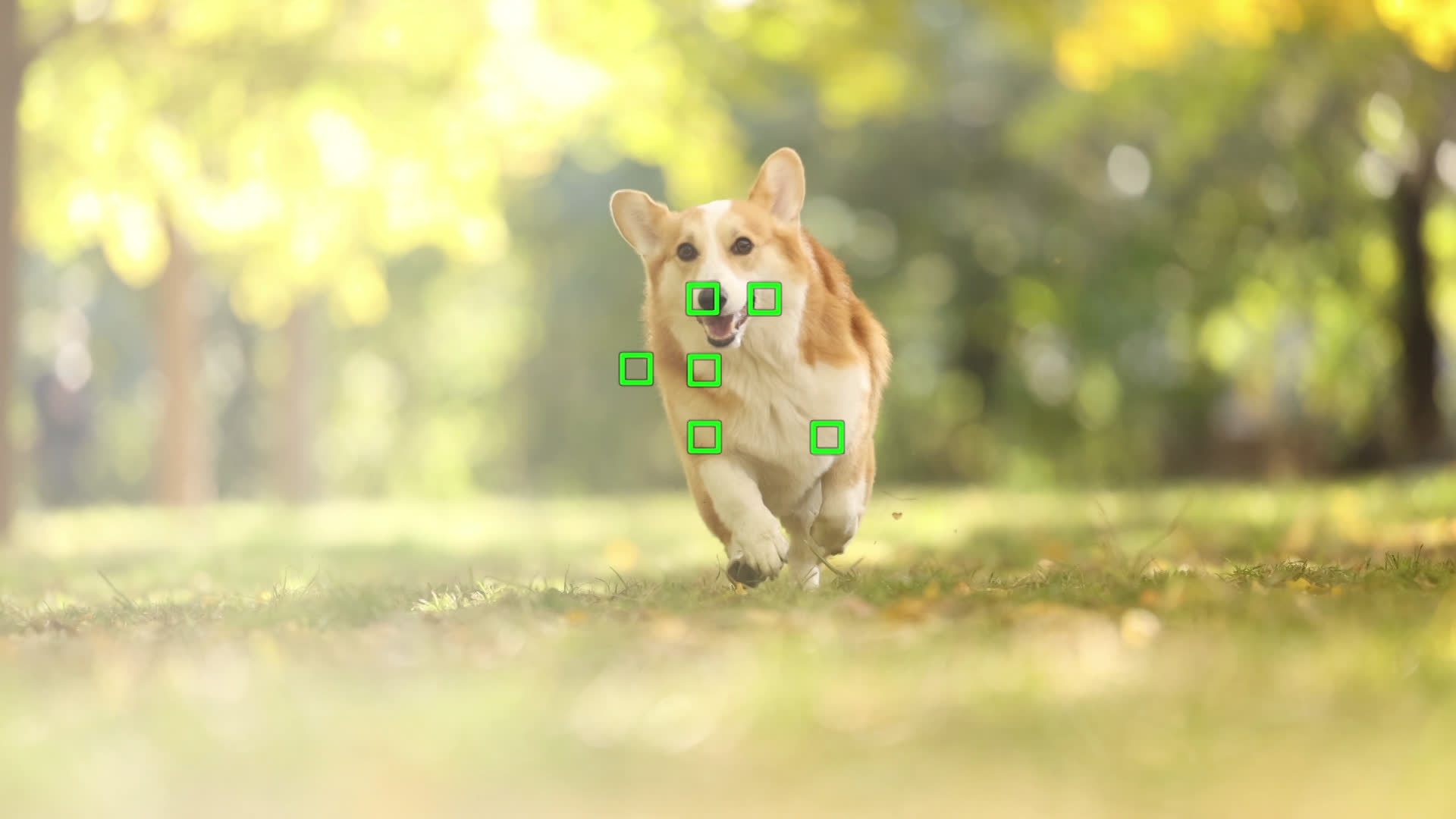
Kids and dogs do not hold a mark. They come at you, or drift away, and the distance you want between camera and subject changes by the second. Indoors, or in a small suburban garden, your own room to move is limited too. A standard zoom lens lets you set the framing from the distance that keeps the subject relaxed rather than the distance the lens demands.
The same applies on the sidelines of a school netball court or club cricket ground. A standard zoom lens will not reach the far try line, and it is not pretending to, but it owns the warm-up, the team huddle, the parents on the bank and the moment straight after the final whistle.
Not every standard zoom lens is built to the same brief. These are the specifications worth comparing before you commit.
The f-number describes how far the aperture opens. Stop down, meaning a higher f-number, and the lens gathers less light and renders less background separation. Open up, meaning a lower f-number, and you gain light, which lets you hold a faster shutter speed against camera shake and keep ISO down when the light is poor.
The widest setting a lens offers is its maximum, or wide-open, aperture, and no lens can go below its own figure. That number is therefore the single best shorthand for how bright a lens is and how much subject separation it can produce.
This matters more here than in many markets. Between short winter afternoons, dim restaurant interiors and evenings interrupted by load-shedding, a lot of South African photography happens in less light than you would like. Primes have traditionally owned this ground, but standard zoom lenses are now available at F2.8 and even F2, which brings prime-like brightness and rendering to a lens that still zooms.
A standard zoom lens spends its life out of the house, which makes weight and bulk a genuine specification rather than a footnote. A compact, light lens does not fight you on a long walk, a full day out or a hike up Table Mountain.
This is doubly true if you have recently moved to an interchangeable-lens camera, or if you are photographing while also keeping an eye on children. A heavy lens quietly becomes the reason the camera stays at home, and the best lens is always the one you had with you.

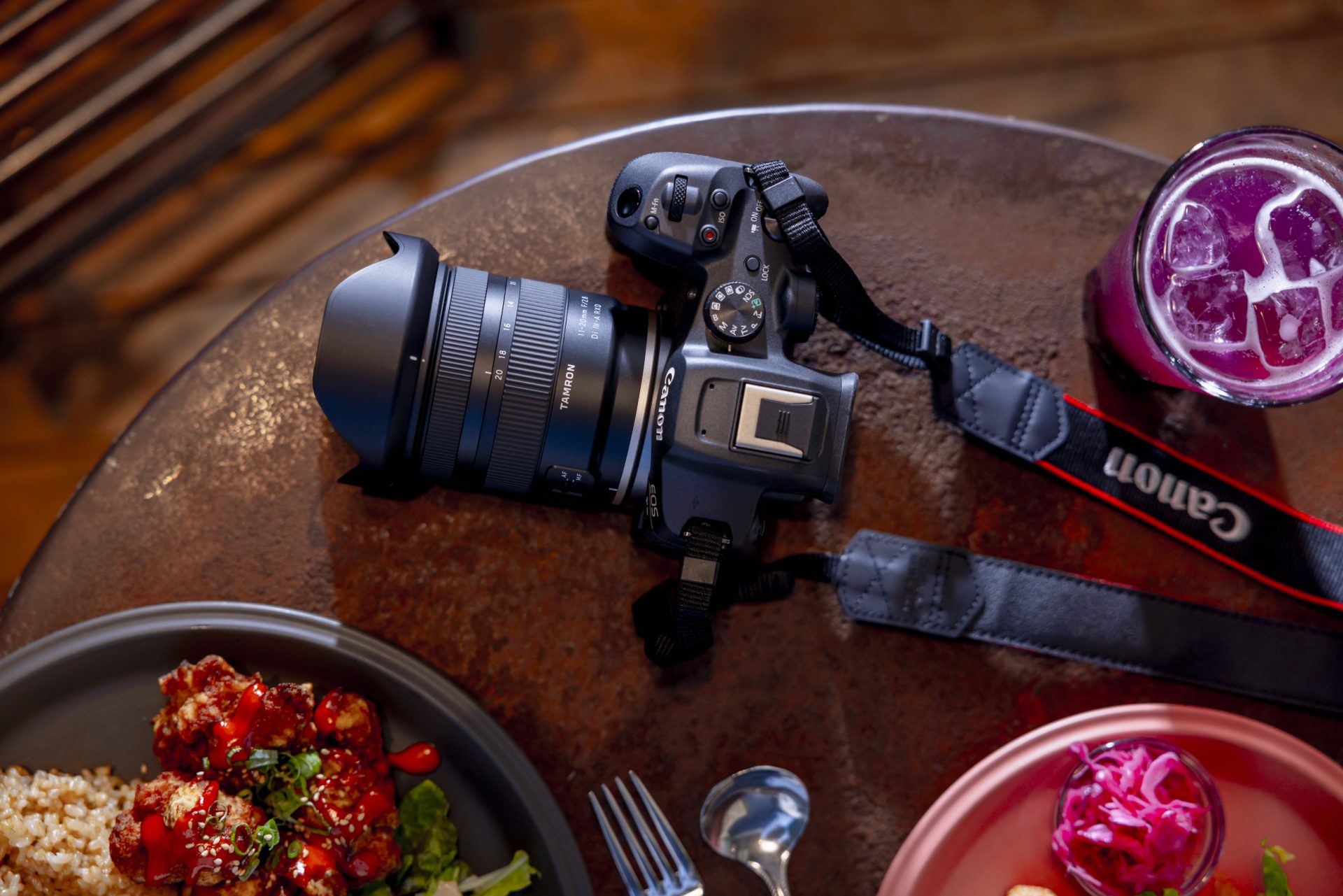
TAMRON 20-40mm F2.8 (Model A062). Focal length: 33mm. Exposure: F4. Shutter speed: 1/250 sec. ISO: 100.
A standard zoom lens is known for its natural angle of view, but the way it handles close subjects widens what you can do with it considerably. A short minimum object distance means you can fill the frame with something small without carrying a dedicated macro lens.
Get right up to a king protea, a beetle working its way along a fence post in the Cederberg or the detail on a piece of beadwork, and fine texture becomes the whole photograph. If near-macro work appeals to you at all, put MOD on your comparison list.
A capable autofocus unit locks on quickly and accurately, which matters whenever the subject is not sitting still. Vibration compensation is worth looking for as well, since it steadies the shot in low light and on the move. On APS-C bodies, TAMRON's 17-70mm F2.8 Di III-A VC RXD (Model B070) pairs a constant F2.8 with built-in VC across the full standard range.
Everything above only counts if the lens physically and electronically fits what you shoot with.
Digital interchangeable-lens cameras use two main sensor sizes, full-frame and APS-C, and the mount that joins body to lens differs by manufacturer and model. Confirm both before you buy: the lens must suit your sensor format and match your mount. If you are buying online rather than over a counter, this is the one specification worth double-checking against your camera's model number.
A standard zoom lens photographs the world at close to the angle of view you see it with, and then lets you widen or tighten that view as the moment requires. Across a single day, that can mean street frames in the morning, portraits at lunch and a landscape on the drive home, all without opening the bag. For anyone weighing up convenience, portability and versatility, and not wanting to sacrifice any one of the three, the standard zoom lens remains the most sensible lens you can own.